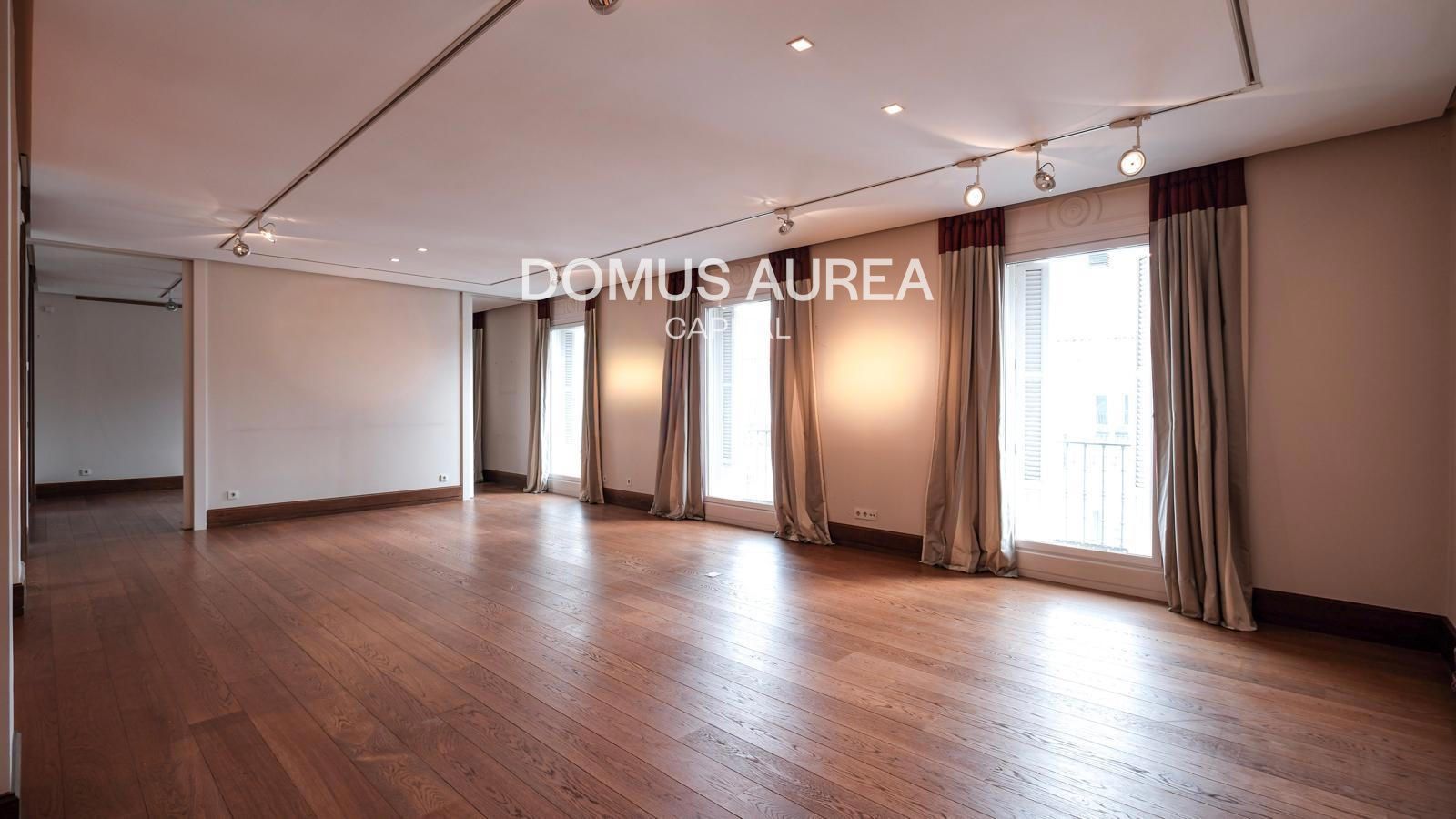
On Claudio Coello, one of Salamanca's most distinguished streets, this fourth-floor apartment occupies a classical building whose facade of wrought-iron balconies and elegant stonework defines the neighbourhood's architectural character. The building retains its original dignified entrance hall, period lift, and a staircase of considerable architectural merit—details that speak to the property's historic lineage. The residence unfolds across 393 m² of living space. The social areas command the front of the apartment, facing the street across seven exterior balconies that draw light and views throughout the day. These rooms flow into one another, creating a generous sequence suited to both daily living and formal gathering. At the core of the home lies a substantial kitchen area, which includes a complete service bedroom. The sleeping quarters comprise four en-suite bedrooms, two of which also open onto the street, preserving the sense of openness that defines the property.
Or contact Domus Aurea Capital ↗.


Salamanca
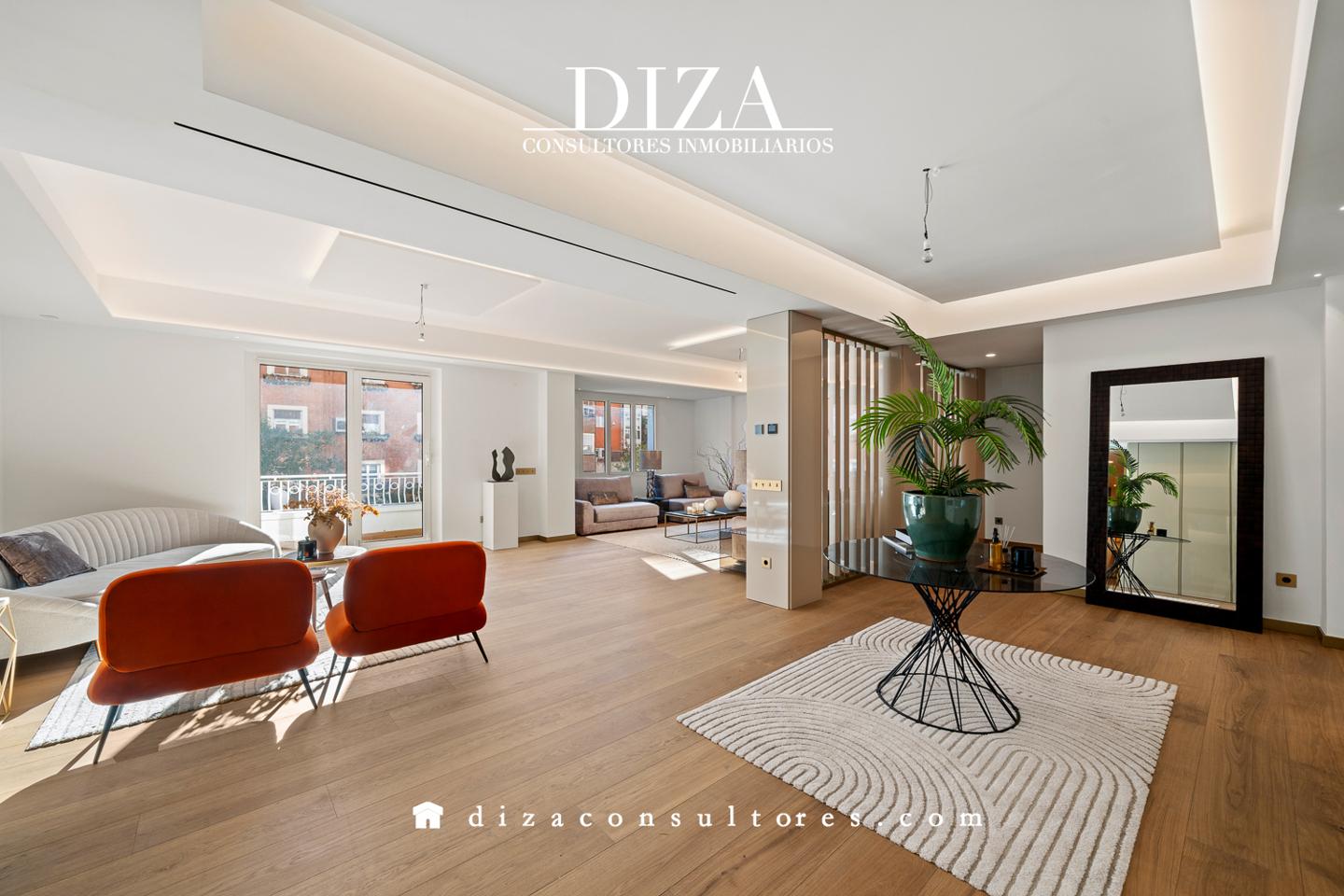
Salamanca sets both Madrid's price ceiling and its social register. Developed in the 19th century by the Marqués de Salamanca as a deliberate enclave for the capital's aristocracy and new industrial wealth, the district still functions that way — embassies, private banks, the Spanish flagships of every European luxury house, and the quiet buildings where old-money families have lived for generations. The grid is rectilinear and deliberate: wide pavements, ten-meter cornice heights, yellow-flowering jacarandas lining the avenues in April. The built form is uneven up close — protected-façade classics on the main avenues, unremarkable 1960s–70s infill on the side streets, a growing share of gut-renovations marketed as "obra nueva" — but the address is the product, and buyers are paying for it.