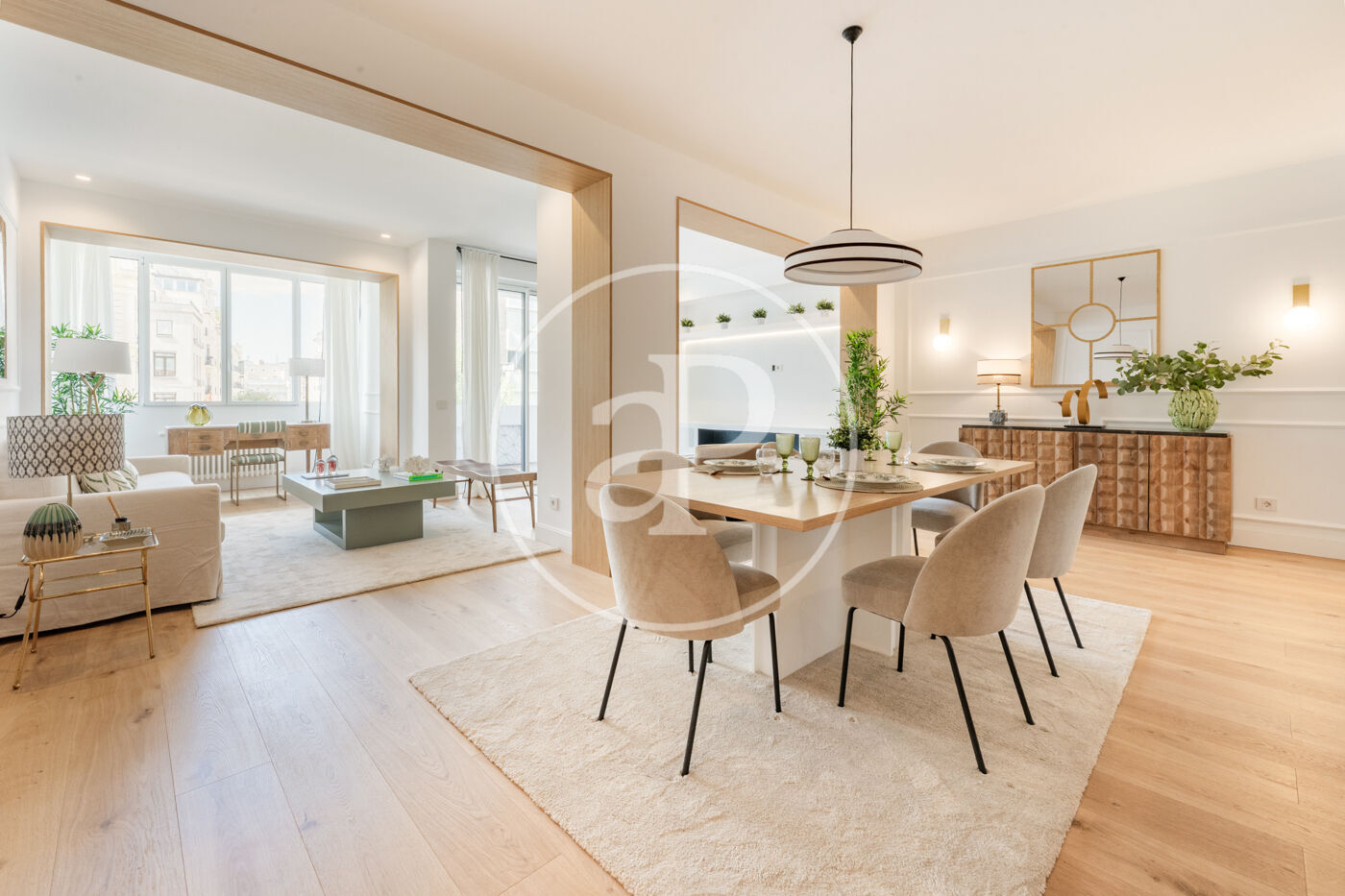
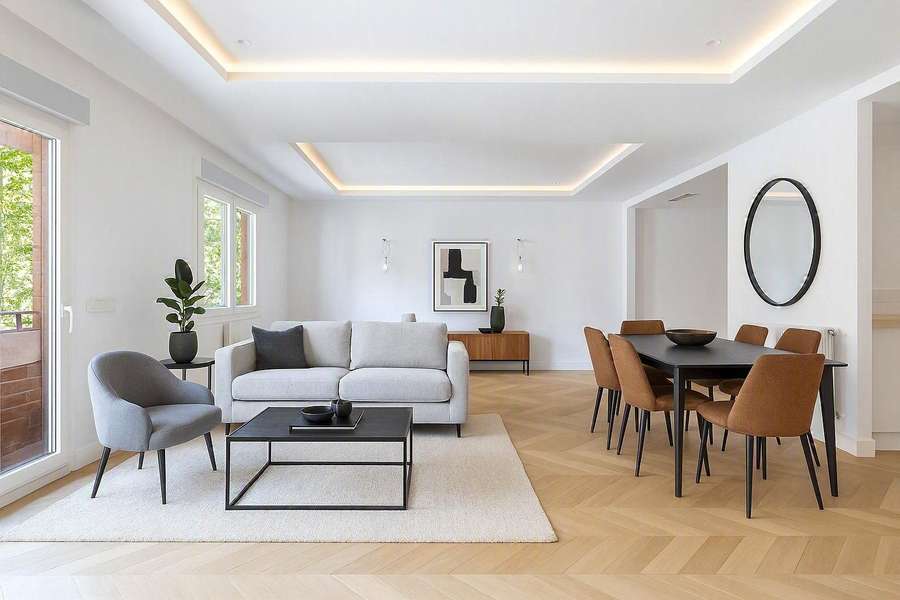
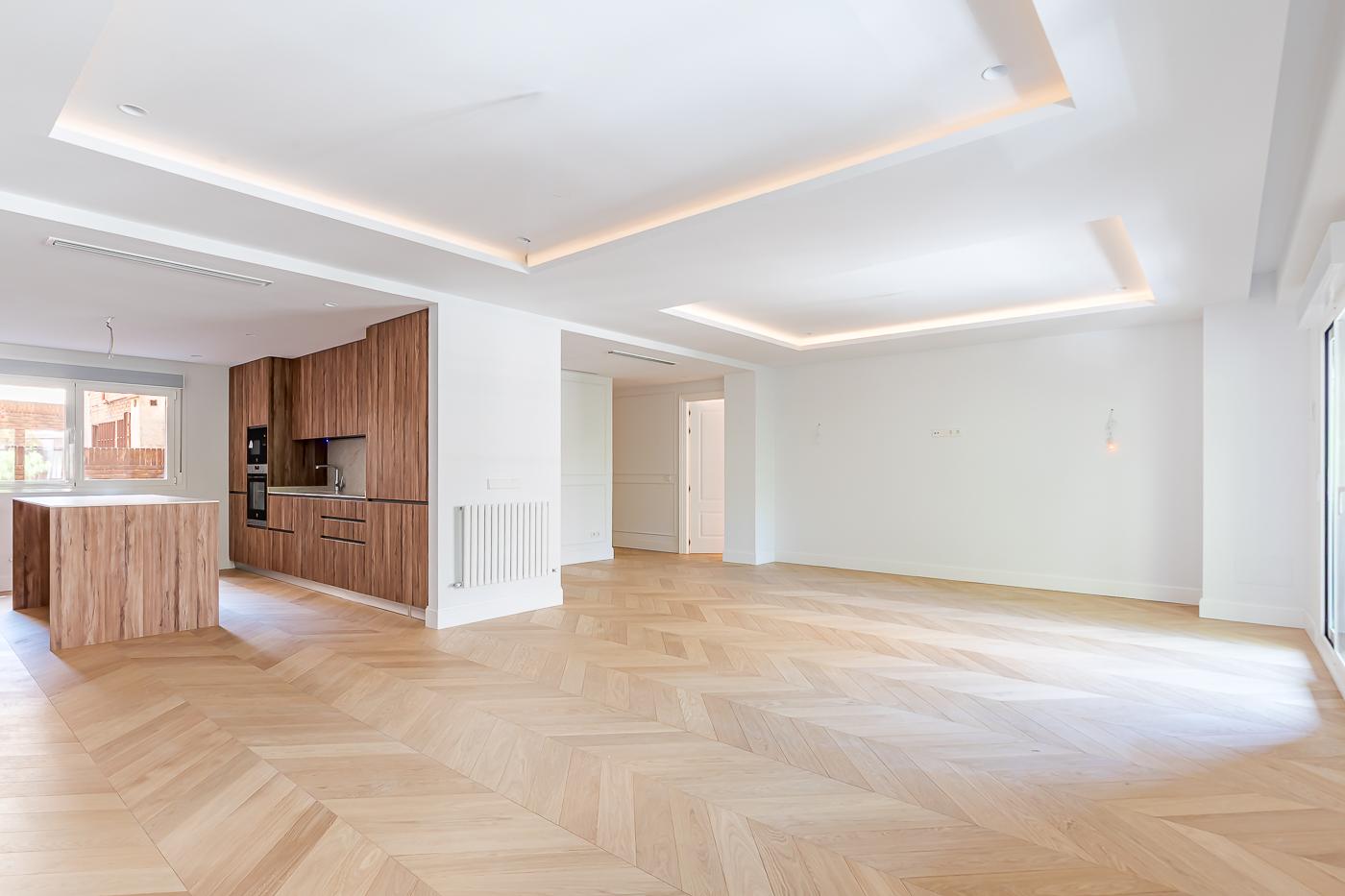
Almagro stands as one of Madrid's most established residential neighbourhoods, bounded by Santa Engracia, José Abascal, Paseo de la Castellana and Génova. The district balances historic palatial architecture with contemporary residences, creating a refined urban setting defined by cultural heritage and quiet sophistication. This 190 m² apartment occupies a semi-basement floor within a building with lift access, newly completed to contemporary standards. The layout distributes two bedrooms across the footprint, each served by its own bathroom. A third bathroom provides additional flexibility. Natural light enters through carefully positioned openings, and a terrace extends the living spaces outward, offering a private outdoor connection within the neighbourhood's dense urban fabric.
Almagro
Almagro is the quiet pocket tucked between Chamberí and the Castellana — a handful of blocks where old-money Spanish families, diplomats, and private-office founders have lived for generations. Streets like Calle Fortuny, Calle Zurbano, and Calle Almagro itself are lined with late-19th-century palacetes originally built as single-family residences, mostly subdivided into one or two full-floor apartments per building, with a few still in the hands of the founding families. The density of embassies and consulates per block is the highest in Madrid outside the formal diplomatic strip on Castellana. The housing stock is unusually homogeneous for central Madrid — stone-and-brick façades, 3–4m ceilings, original wrought-iron balustrades — and apartments run large, 180–400 m² being typical.