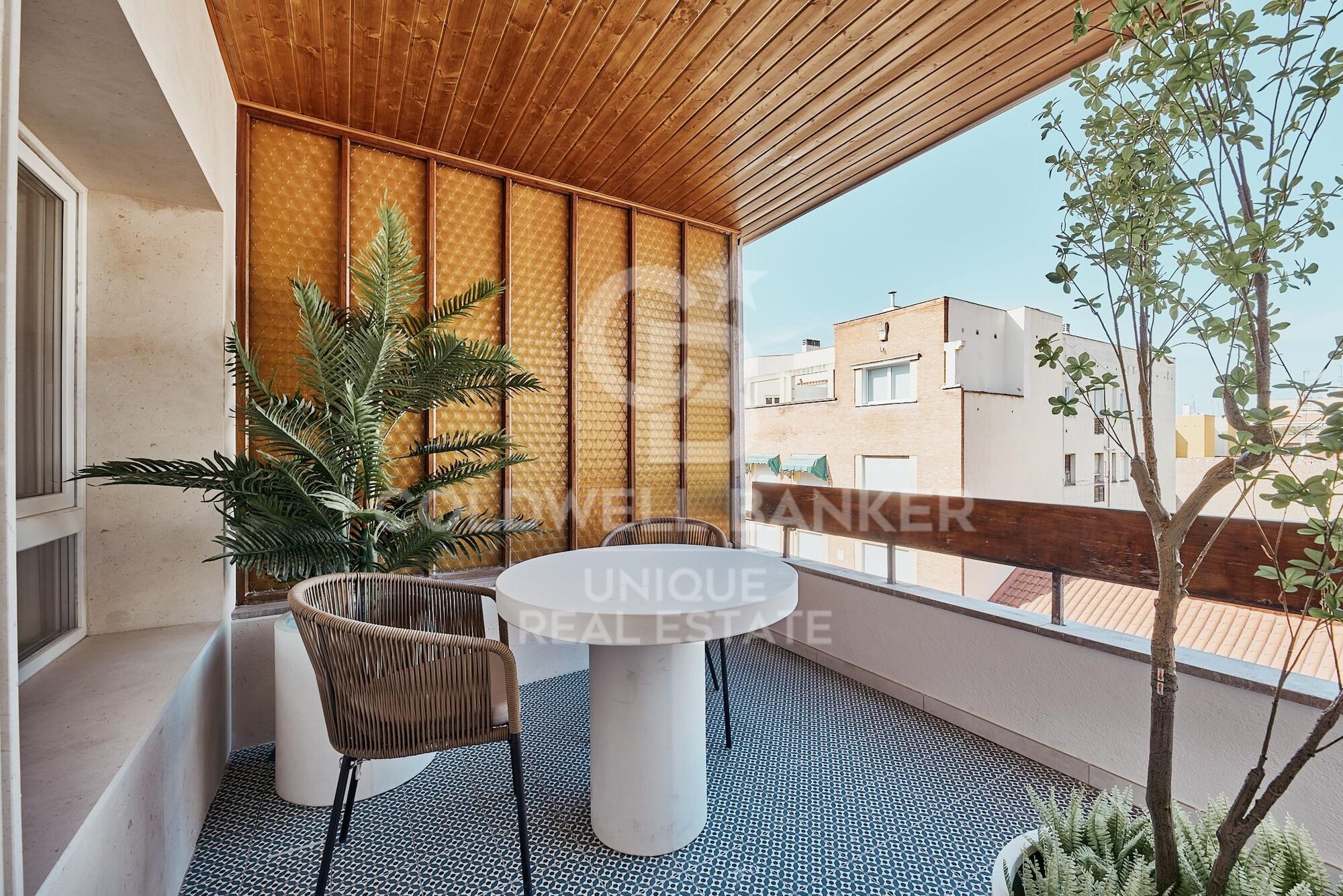
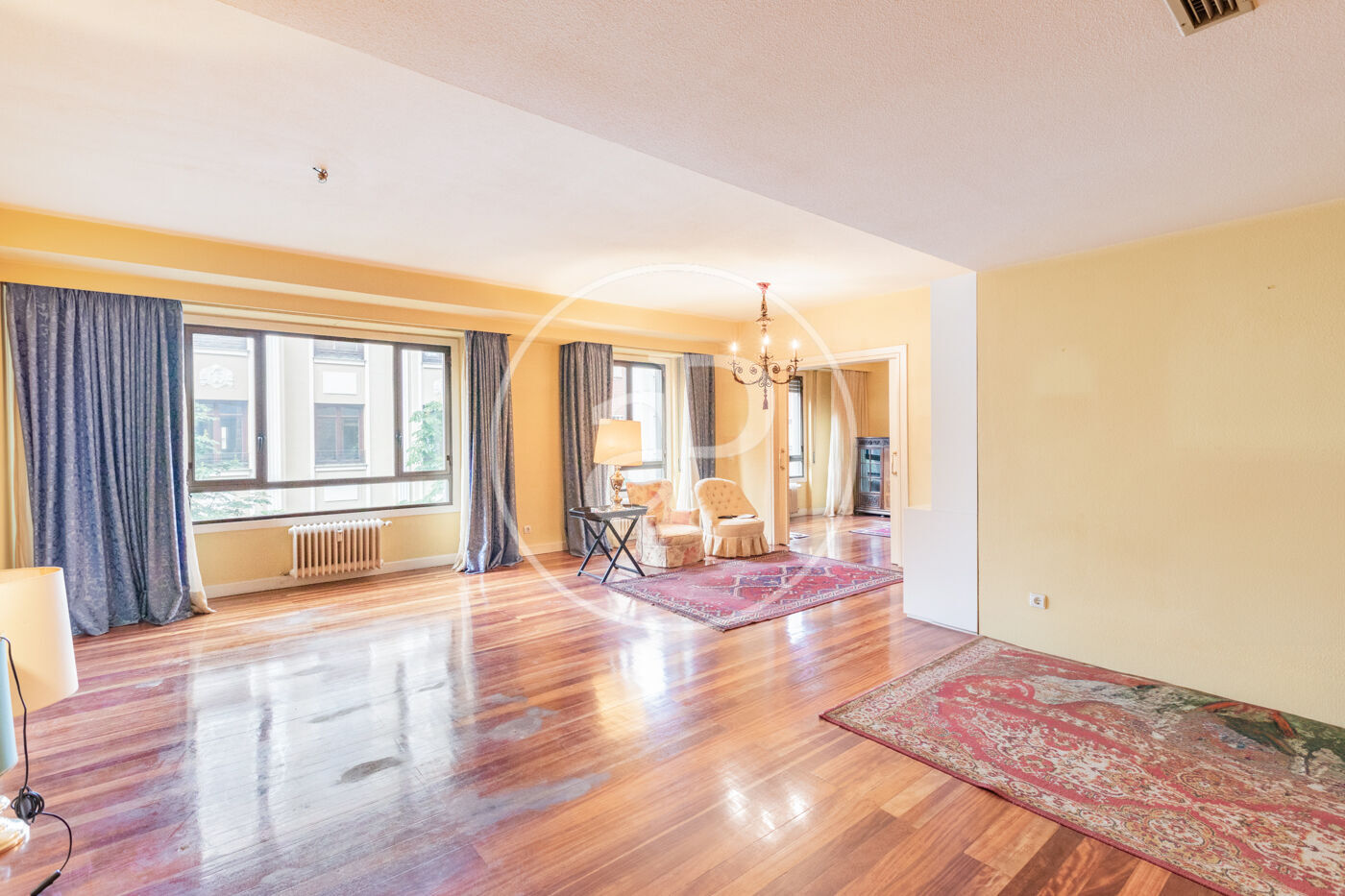
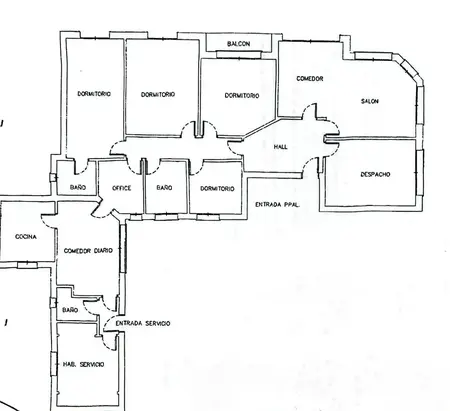
In the heart of Castellana, this 1920 apartment offers a rare canvas for architectural reimagining. High ceilings, generous proportions and abundant natural light define the space—qualities that emerge from the building's period construction and its orientation toward Pinar Street, where bay windows and balconies frame the quieter rhythms of the neighbourhood. The layout spans four bedrooms across three bathrooms, organised around a series of interconnected rooms that speak to a more formal domestic arrangement. The apartment requires comprehensive renovation, yet its structural integrity and spatial clarity provide a strong foundation for a bespoke approach to contemporary living. A lift serves the building, and a concierge ensures daily operational ease.
Salamanca
Salamanca sets both Madrid's price ceiling and its social register. Developed in the 19th century by the Marqués de Salamanca as a deliberate enclave for the capital's aristocracy and new industrial wealth, the district still functions that way — embassies, private banks, the Spanish flagships of every European luxury house, and the quiet buildings where old-money families have lived for generations. The grid is rectilinear and deliberate: wide pavements, ten-meter cornice heights, yellow-flowering jacarandas lining the avenues in April. The built form is uneven up close — protected-façade classics on the main avenues, unremarkable 1960s–70s infill on the side streets, a growing share of gut-renovations marketed as "obra nueva" — but the address is the product, and buyers are paying for it.