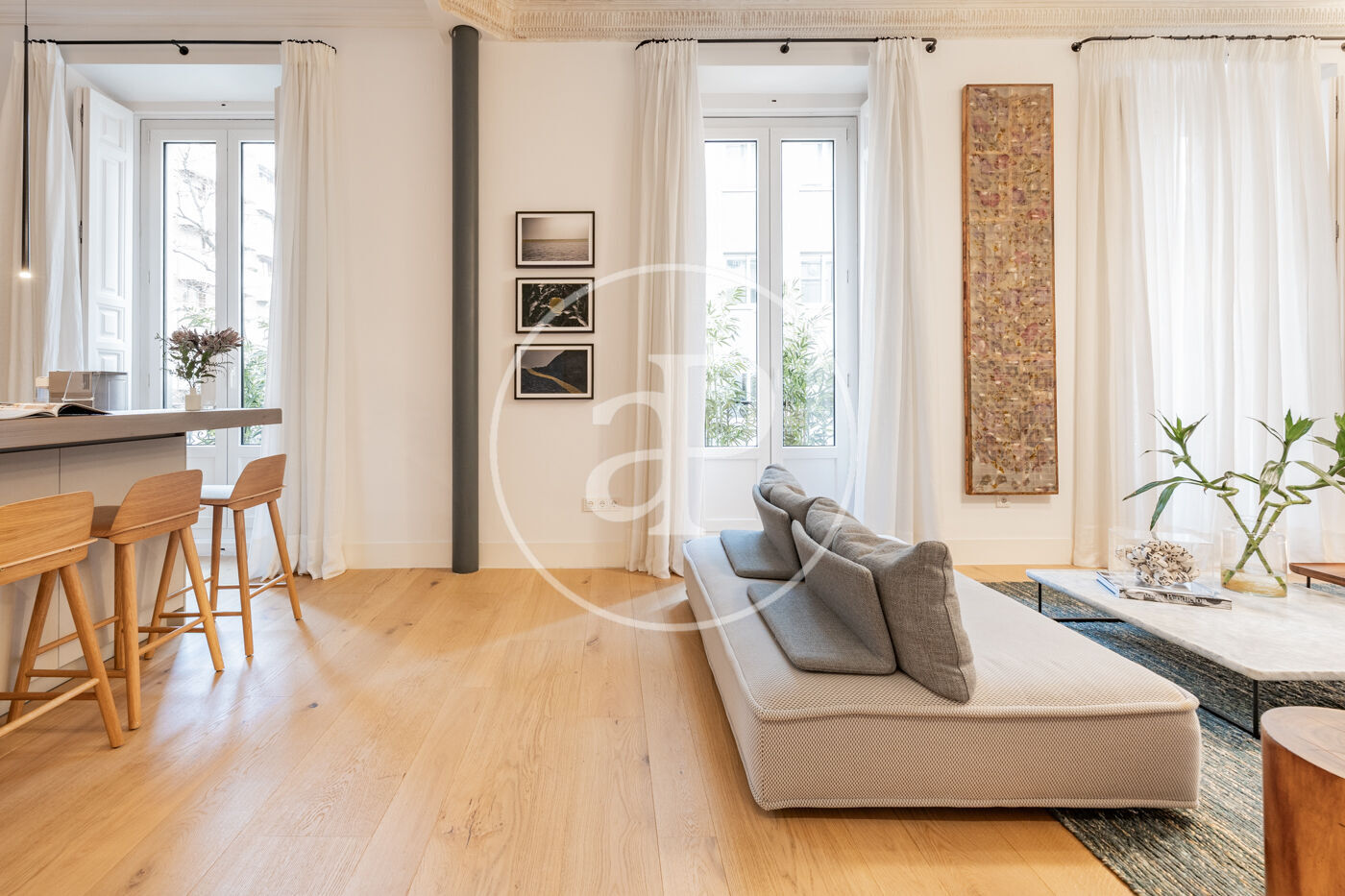
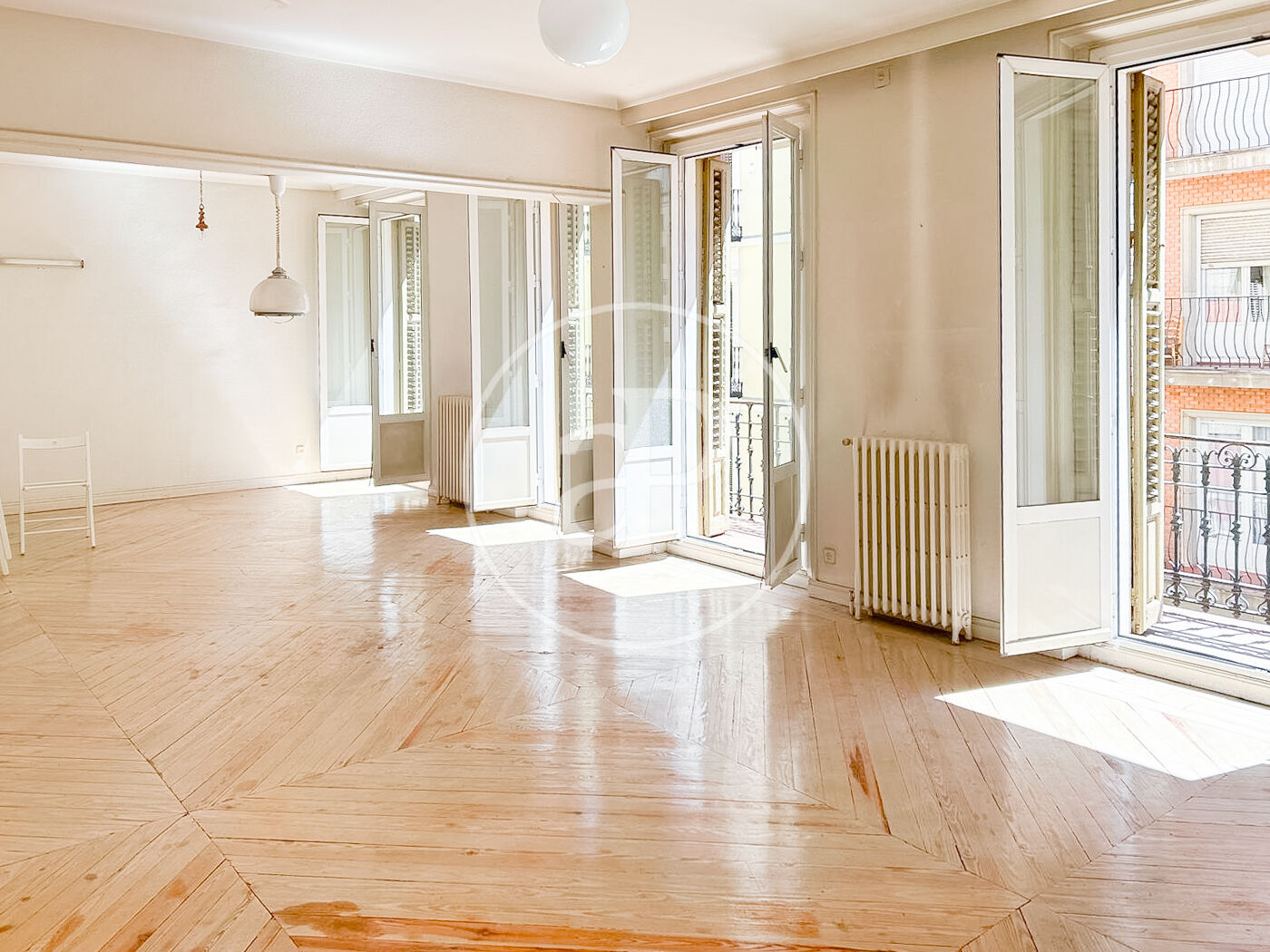
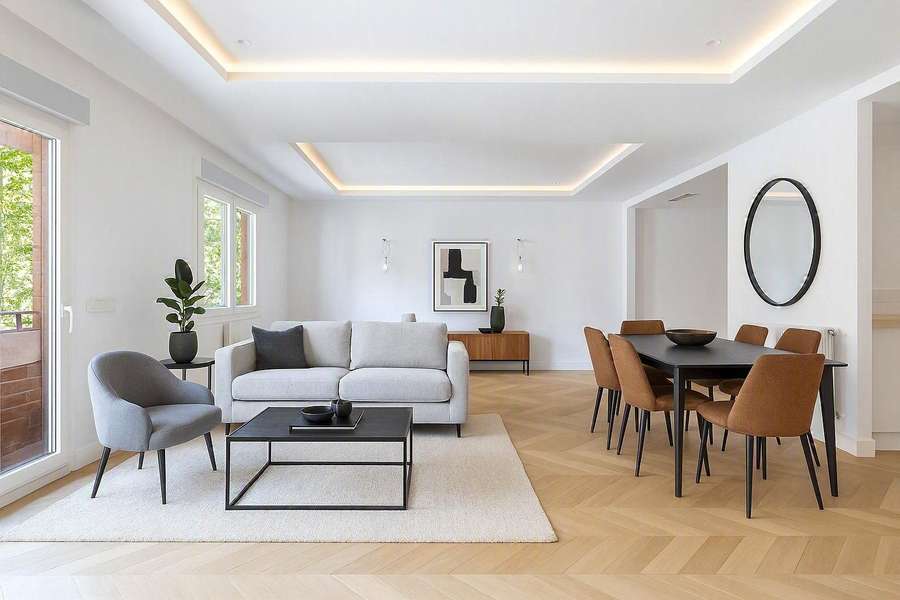
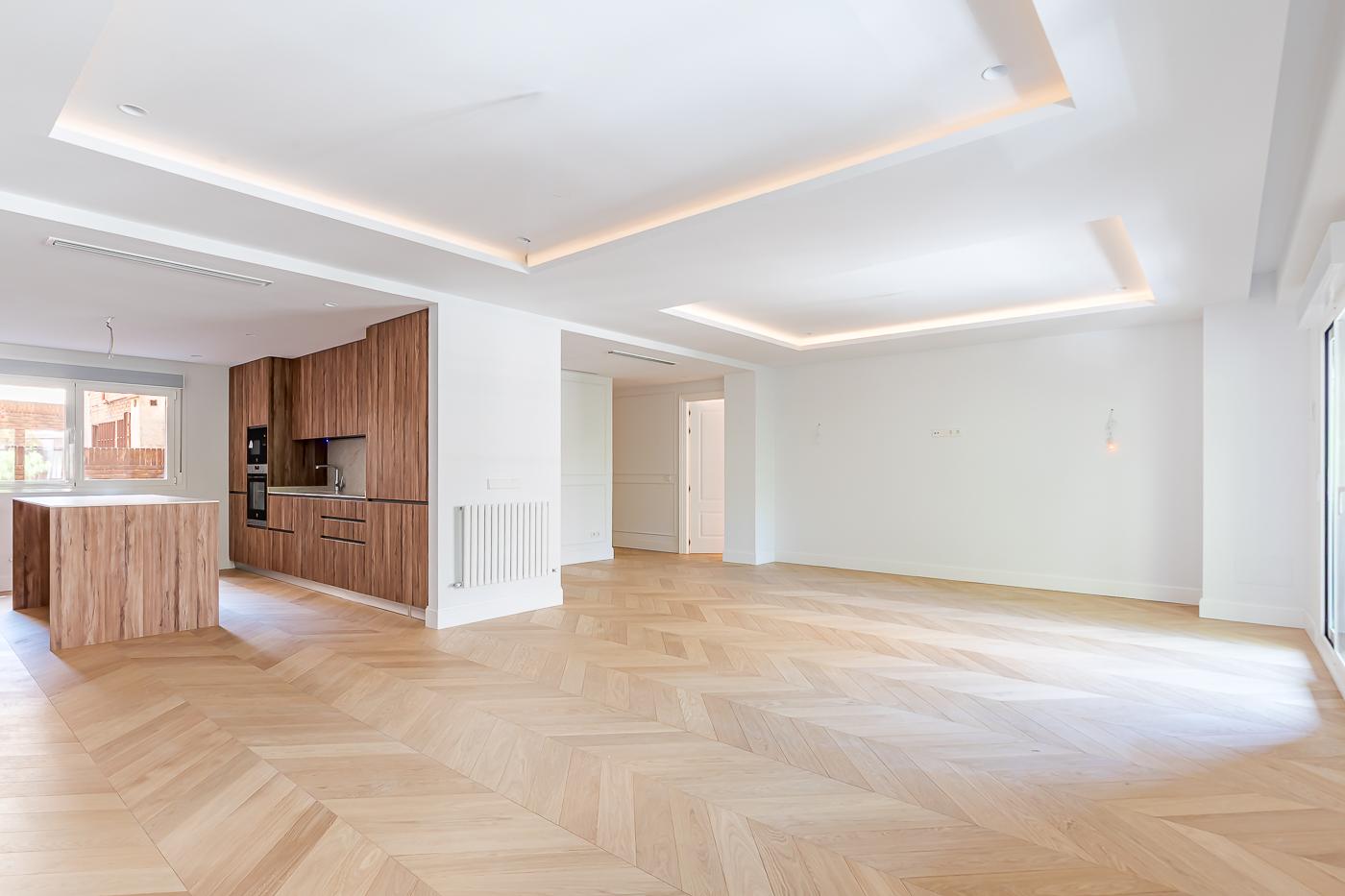
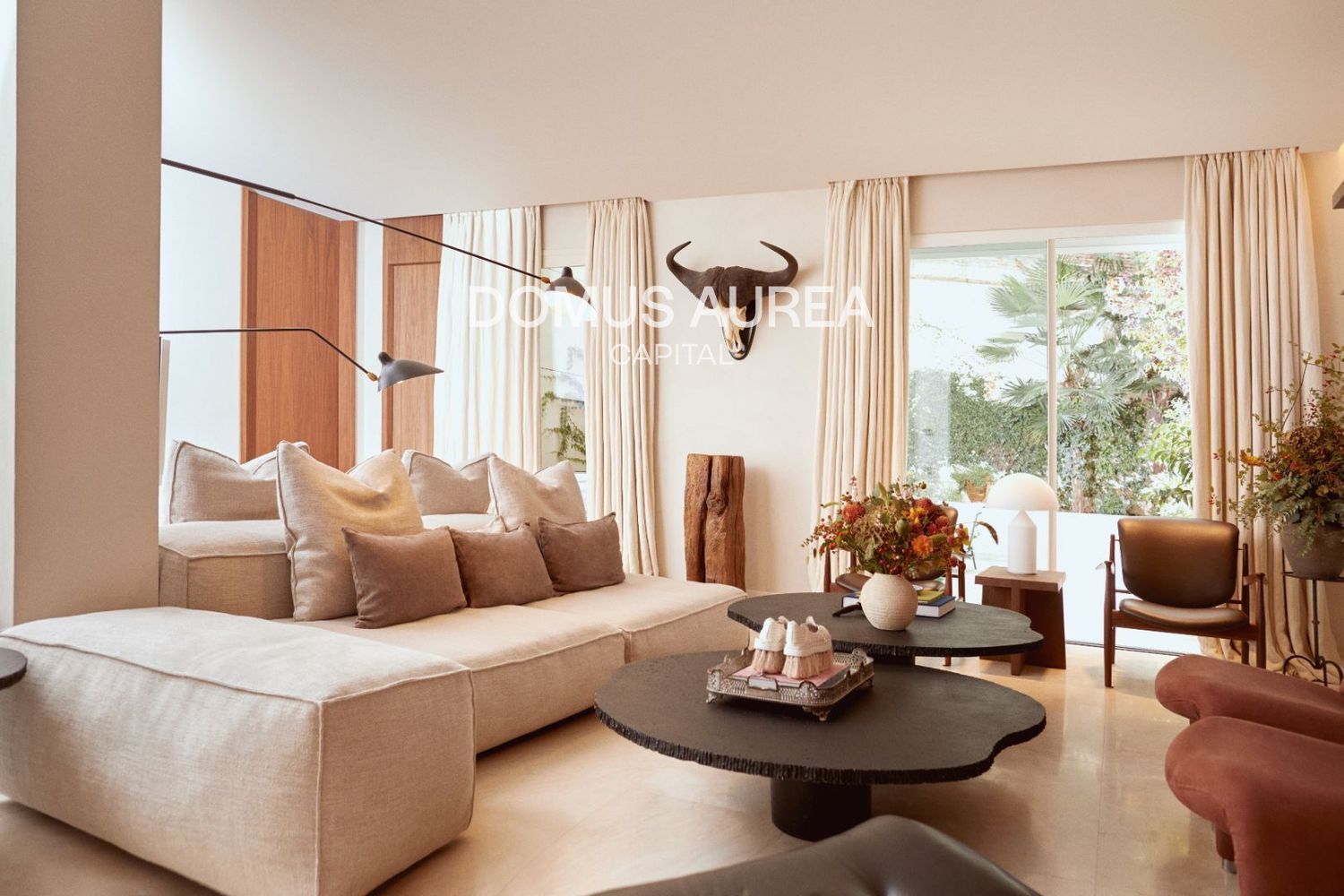
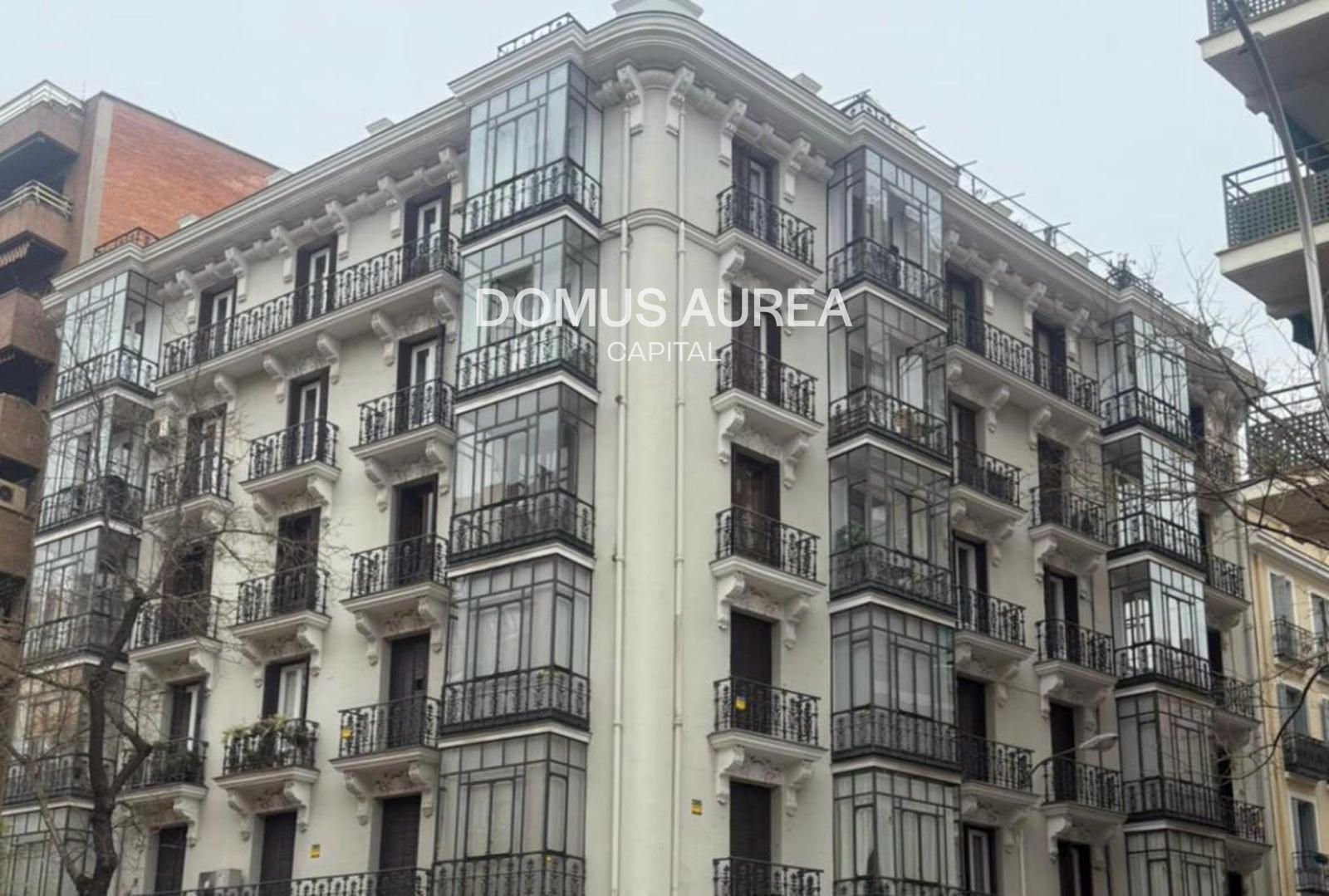
Almagro is a neighbourhood within Chamberí, defined by its residential prestige and layered urban character. Bounded by Santa Engracia, José Abascal, Paseo de la Castellana and Génova, it holds elegant period buildings alongside contemporary architecture, creating a composed and cultured setting within the city. This 267 m² apartment occupies the second floor of a classic Madrid building with lift access. The layout centres on a generous living and dining area that establishes the home's spatial rhythm. The single bedroom is positioned as a private retreat, supported by three bathrooms that provide rare practicality for a residence of this configuration. A terrace extends the interior outward, offering an outdoor connection within the urban fabric.

Almagro
Almagro is the quiet pocket tucked between Chamberí and the Castellana — a handful of blocks where old-money Spanish families, diplomats, and private-office founders have lived for generations. Streets like Calle Fortuny, Calle Zurbano, and Calle Almagro itself are lined with late-19th-century palacetes originally built as single-family residences, mostly subdivided into one or two full-floor apartments per building, with a few still in the hands of the founding families. The density of embassies and consulates per block is the highest in Madrid outside the formal diplomatic strip on Castellana. The housing stock is unusually homogeneous for central Madrid — stone-and-brick façades, 3–4m ceilings, original wrought-iron balustrades — and apartments run large, 180–400 m² being typical.