.png)
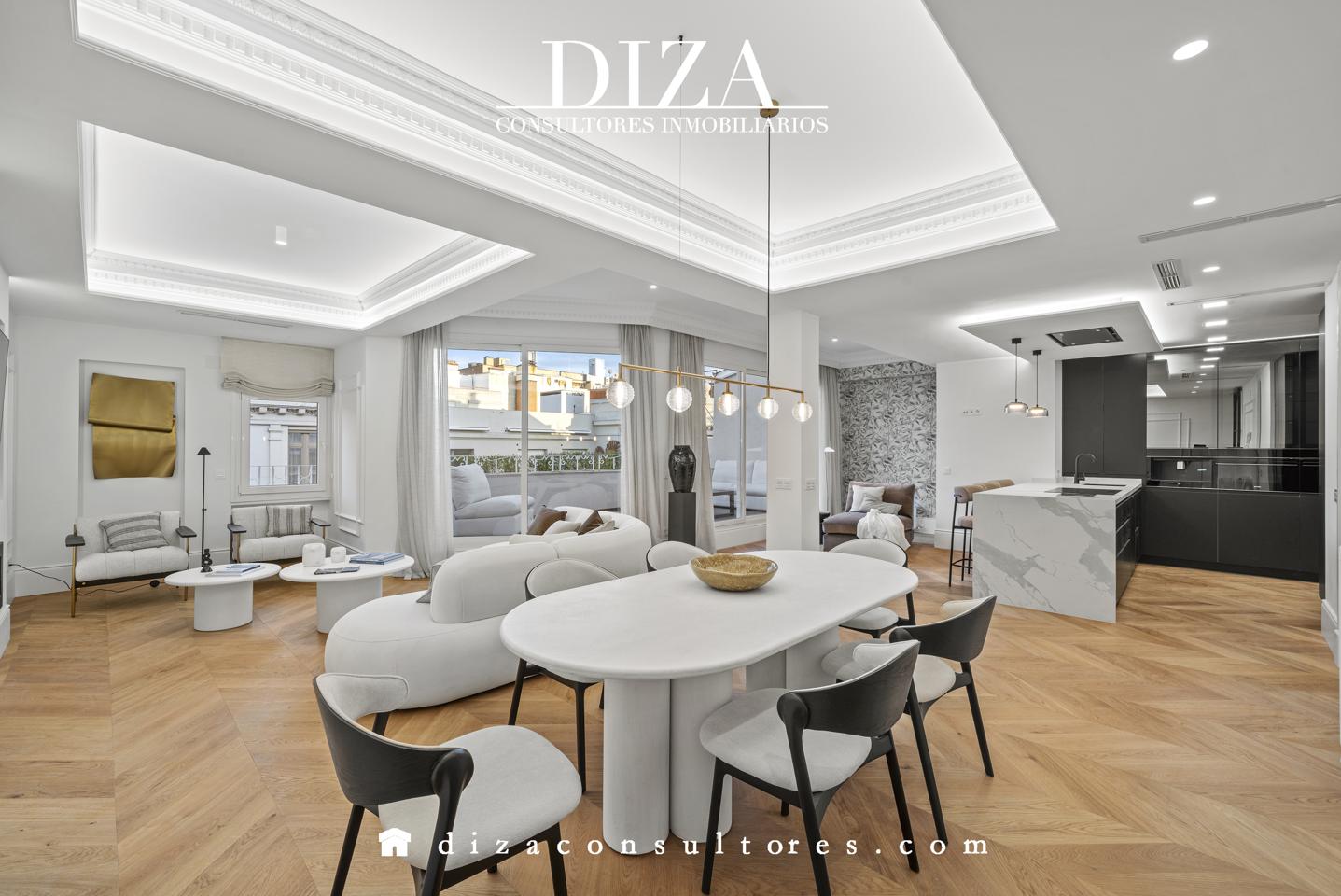
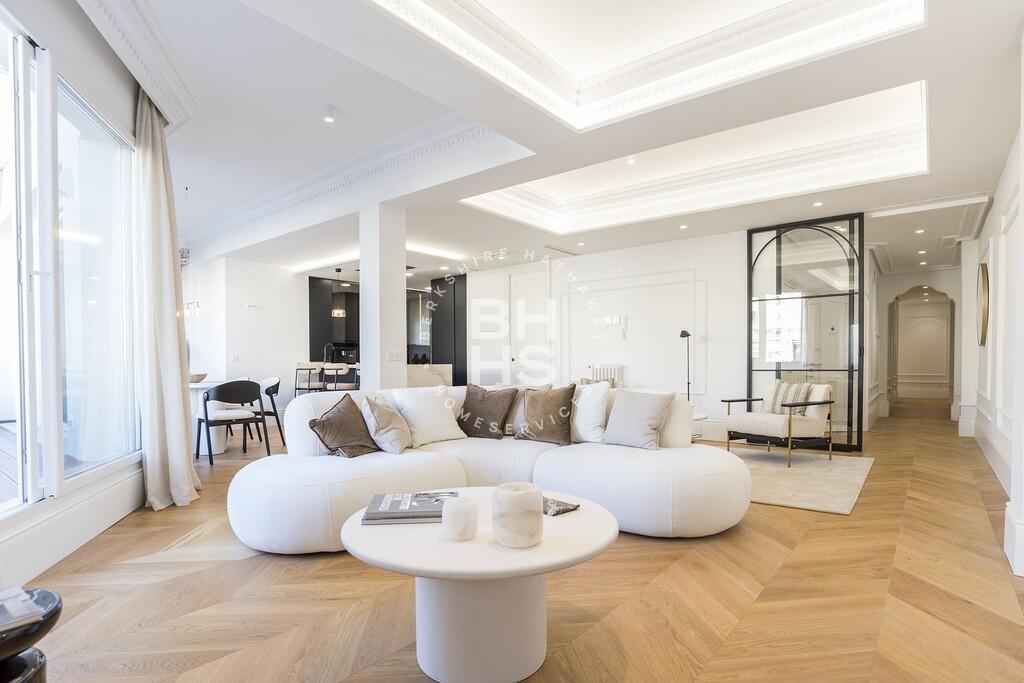
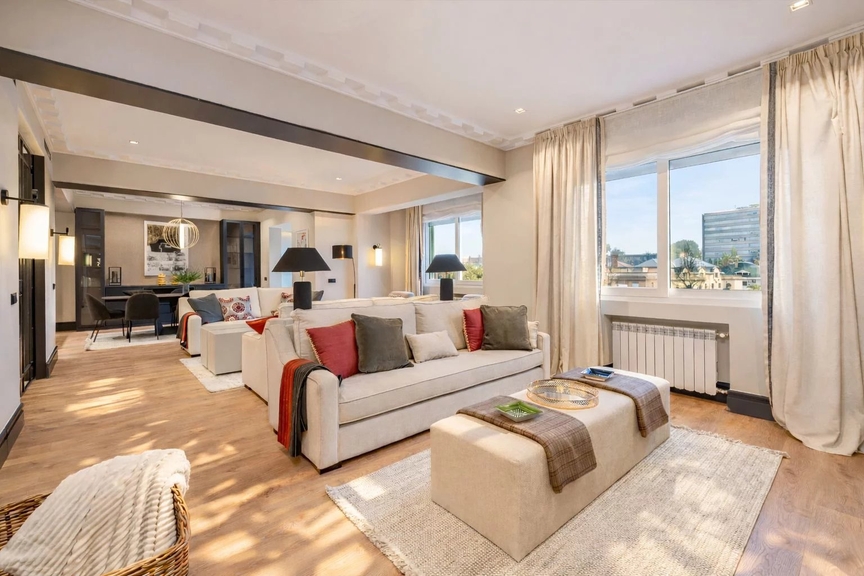
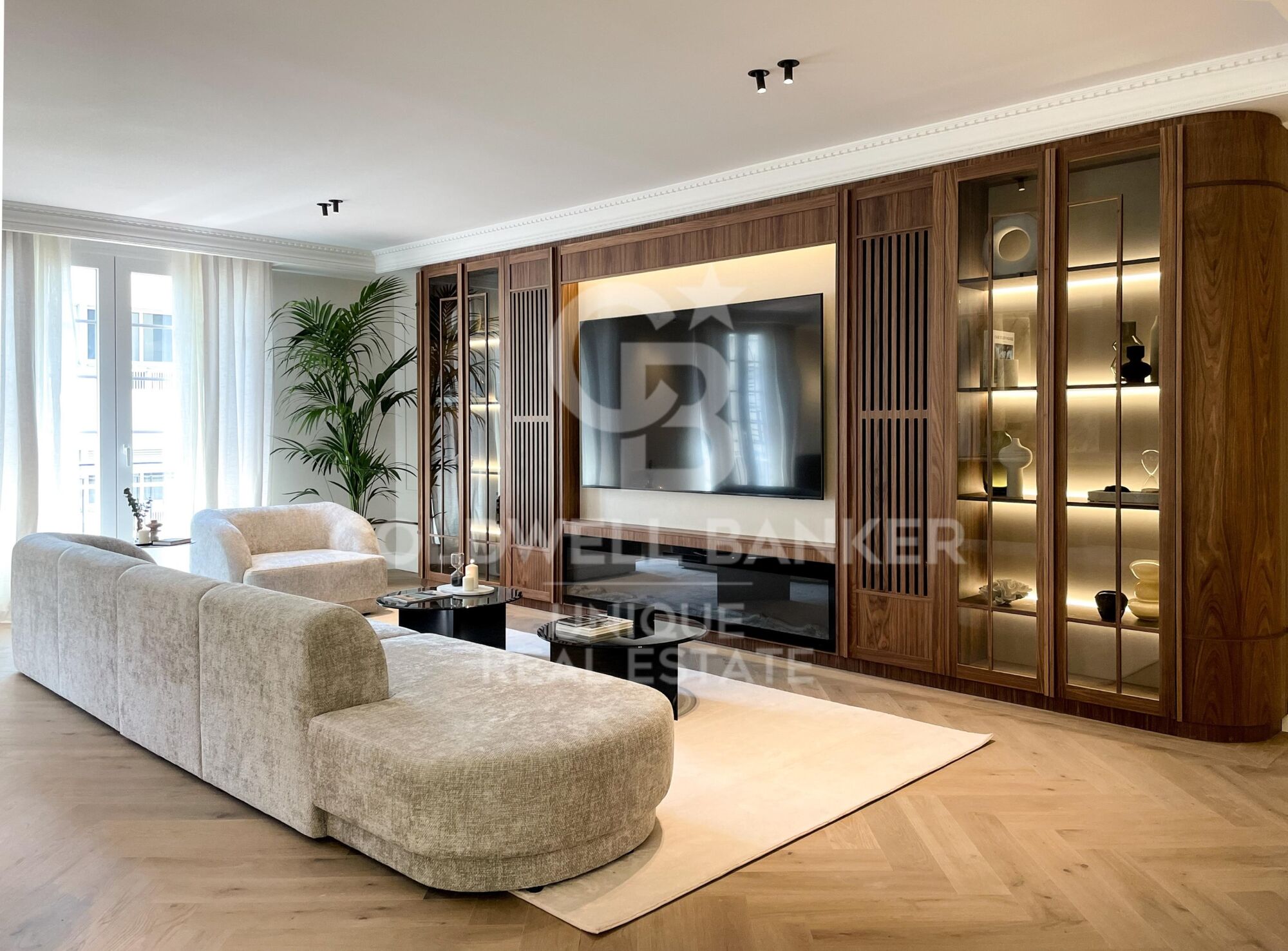
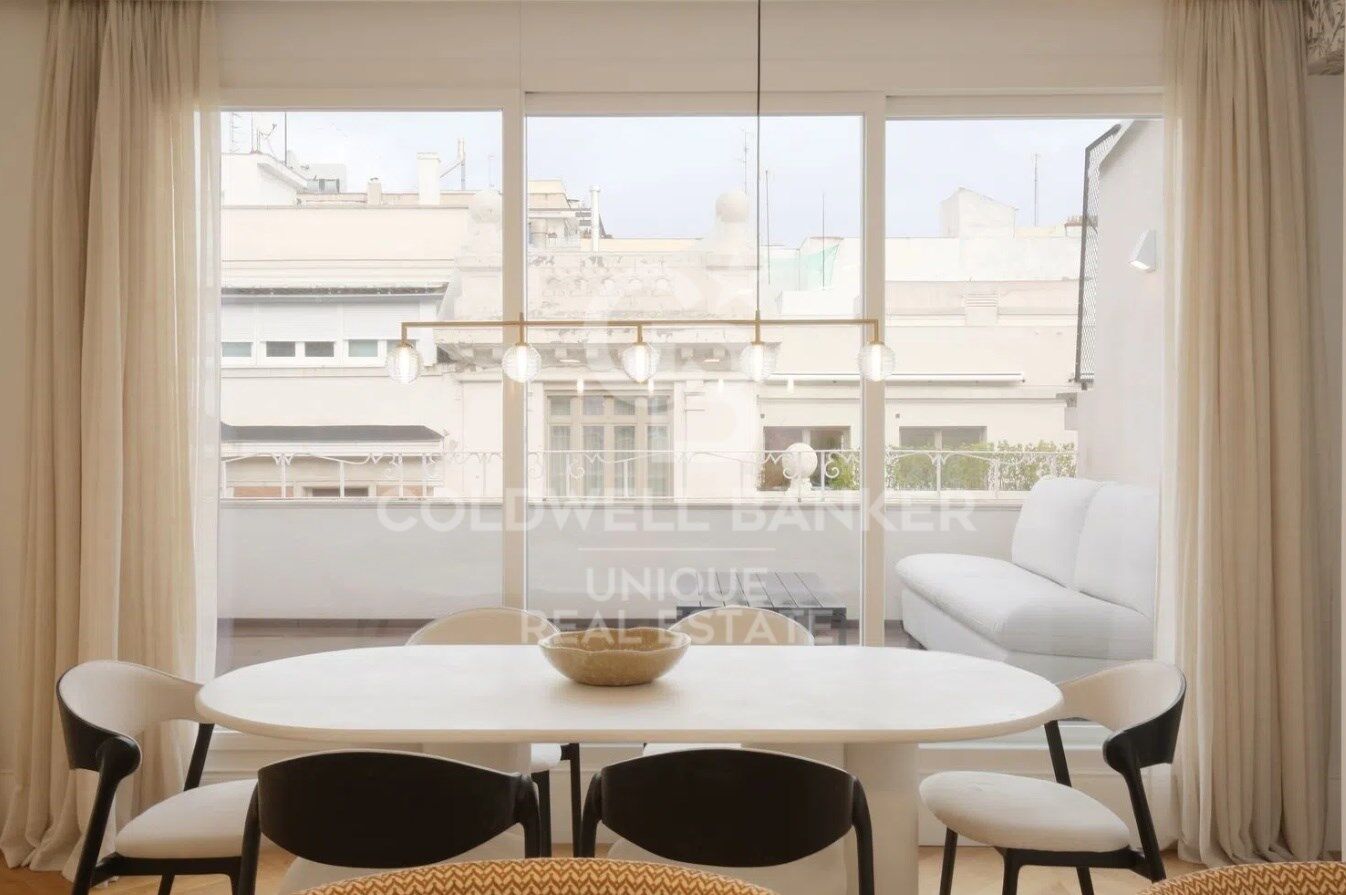
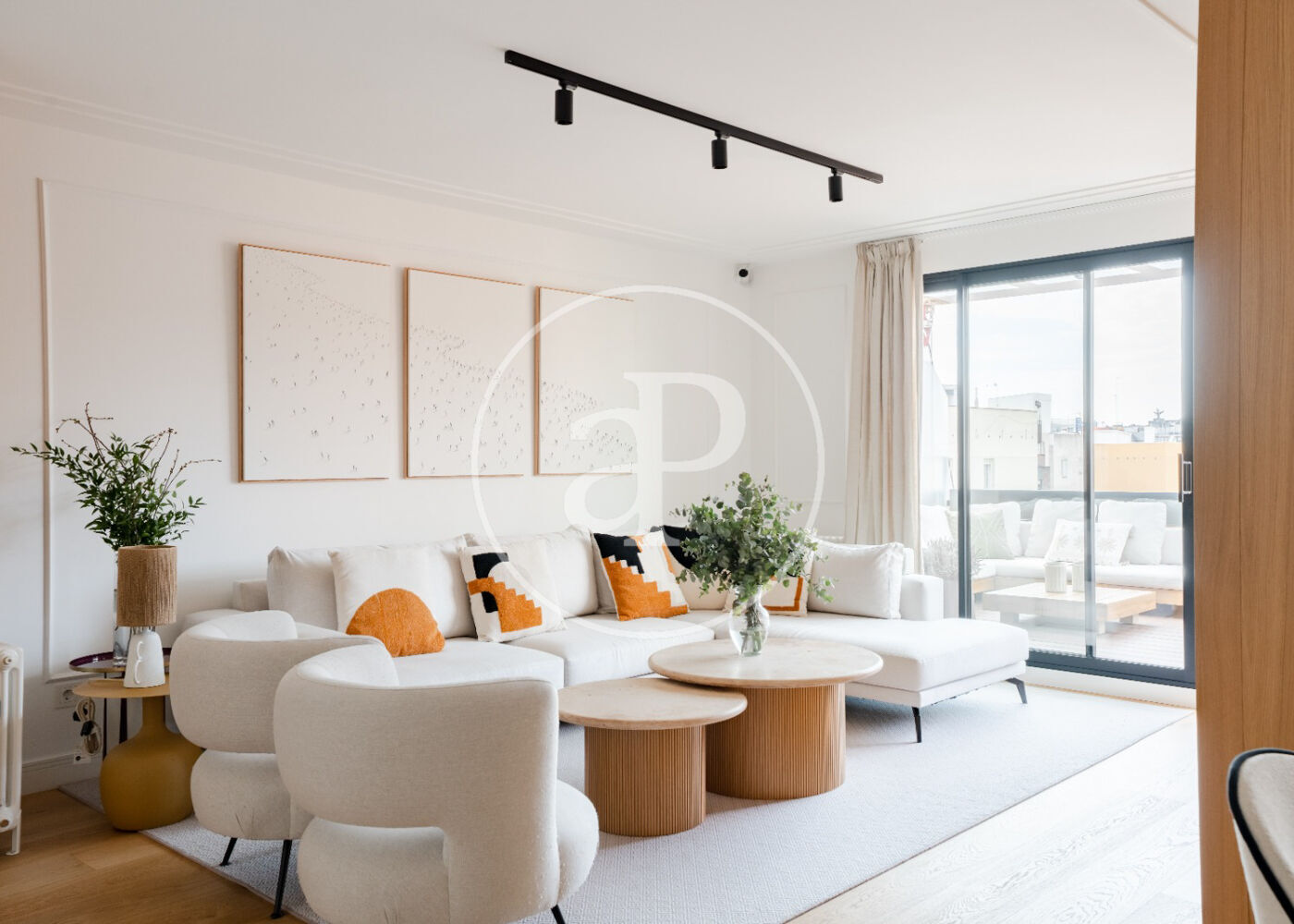
On a quiet stretch of Madrid’s Paseo de la Castellana, within the refined urban fabric of Salamanca, this residence occupies the upper floor of a mid-century building. The architecture retains its original proportions and character, now refined through careful restoration that preserves the integrity of the space while introducing contemporary precision. The apartment is accessed via a private lift that opens directly into the entrance hall, where natural light begins to shape the experience of the home. The sequence unfolds from a central gallery that distributes the space with clarity. To one side, the living and dining areas form a continuous volume, their high ceilings and large windows framing views of the city. A discreet terrace extends the interior outward, offering a private outdoor space that remains sheltered from the urban environment. The kitchen, positioned adjacent to the dining area, is finished in natural stone and oak, with integrated appliances that maintain the clean lines of the design. Beyond, the sleeping quarters are organised around two suites, each with its own dressing area and bathroom. The principal suite includes a separate study, while the second bathroom serves the guest area. Throughout, materials such as travertine, brushed oak, and honed marble establish a quiet, cohesive language, their textures and tones responding to the changing light of the day.

Salamanca
Salamanca sets both Madrid's price ceiling and its social register. Developed in the 19th century by the Marqués de Salamanca as a deliberate enclave for the capital's aristocracy and new industrial wealth, the district still functions that way — embassies, private banks, the Spanish flagships of every European luxury house, and the quiet buildings where old-money families have lived for generations. The grid is rectilinear and deliberate: wide pavements, ten-meter cornice heights, yellow-flowering jacarandas lining the avenues in April. The built form is uneven up close — protected-façade classics on the main avenues, unremarkable 1960s–70s infill on the side streets, a growing share of gut-renovations marketed as "obra nueva" — but the address is the product, and buyers are paying for it.