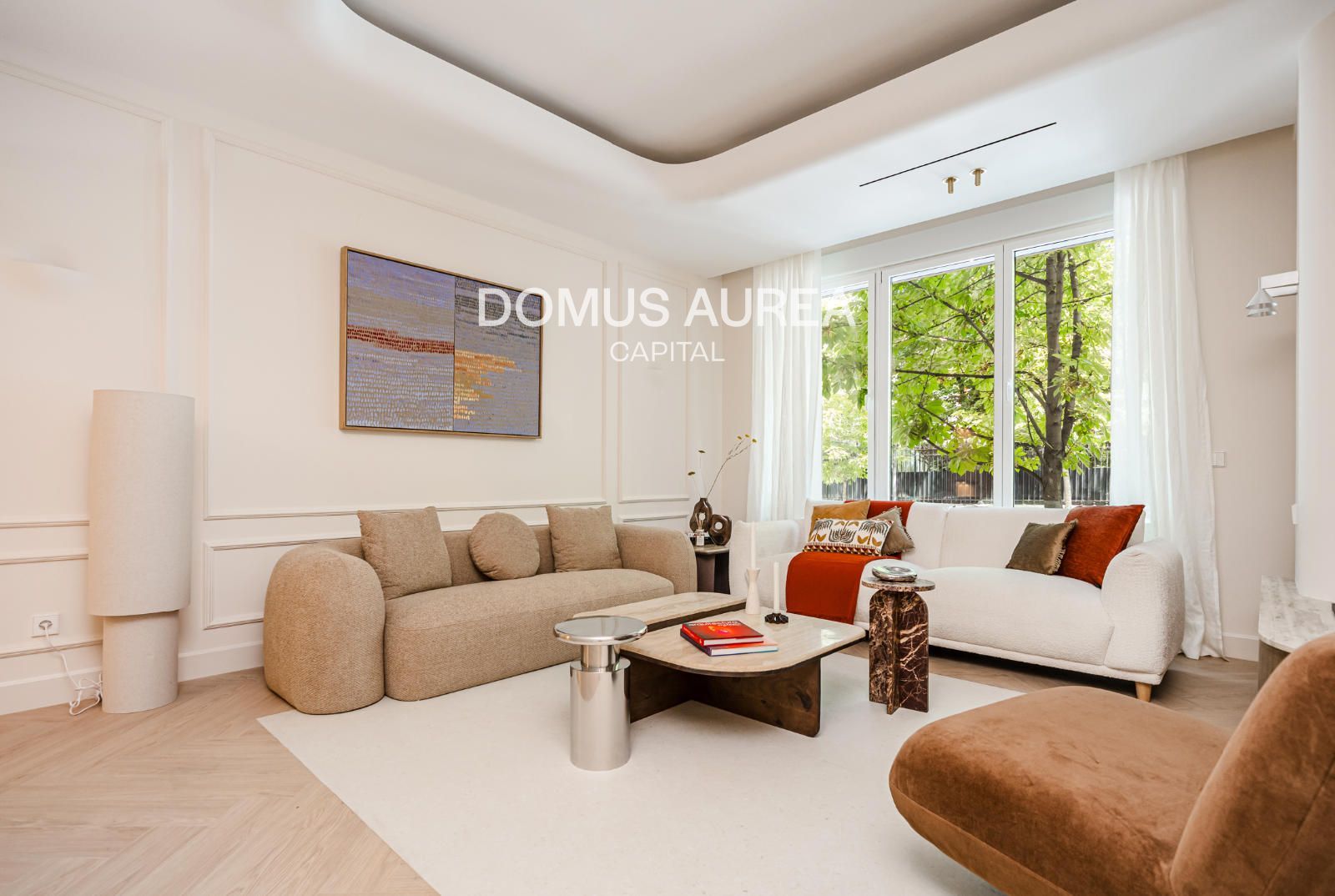
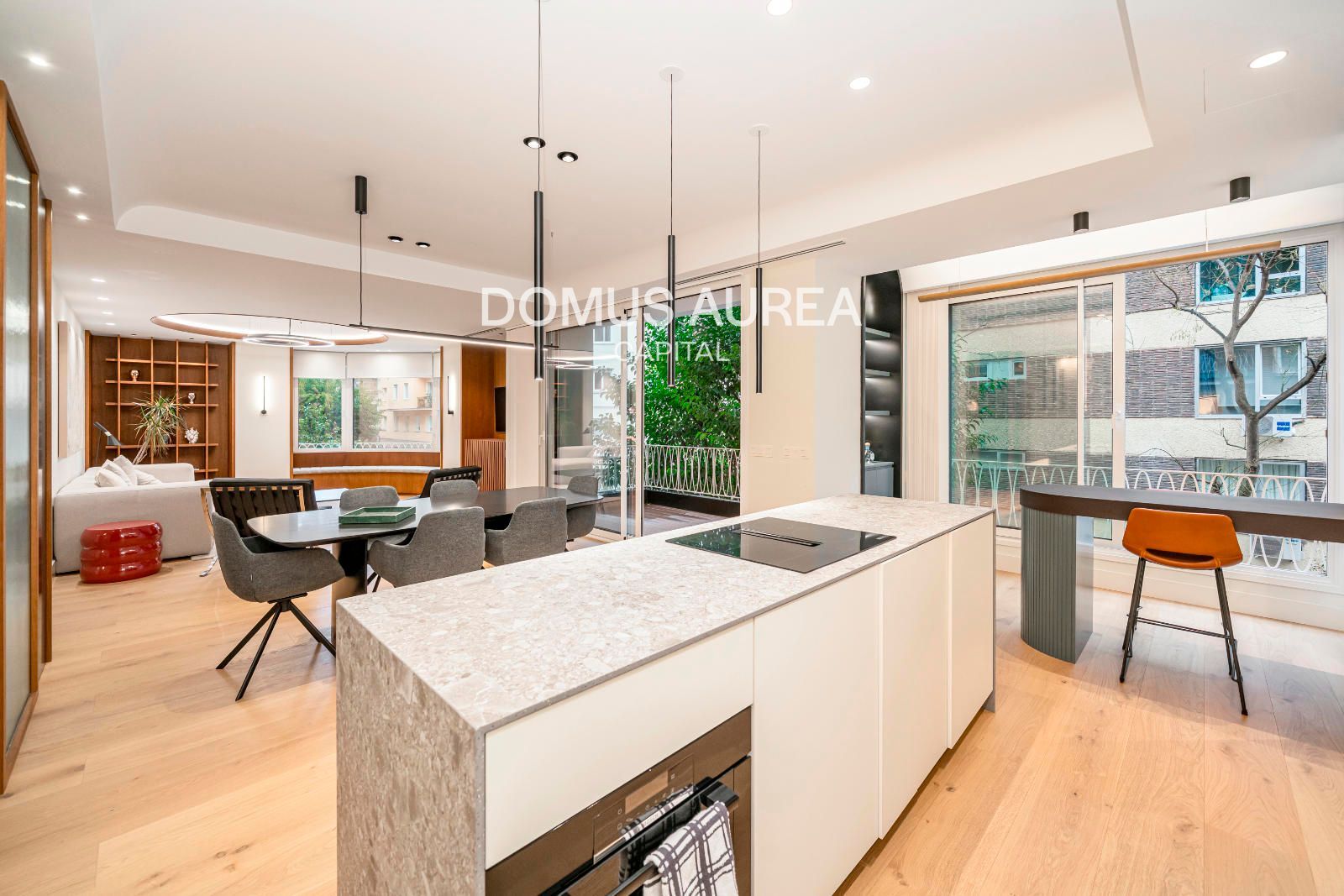
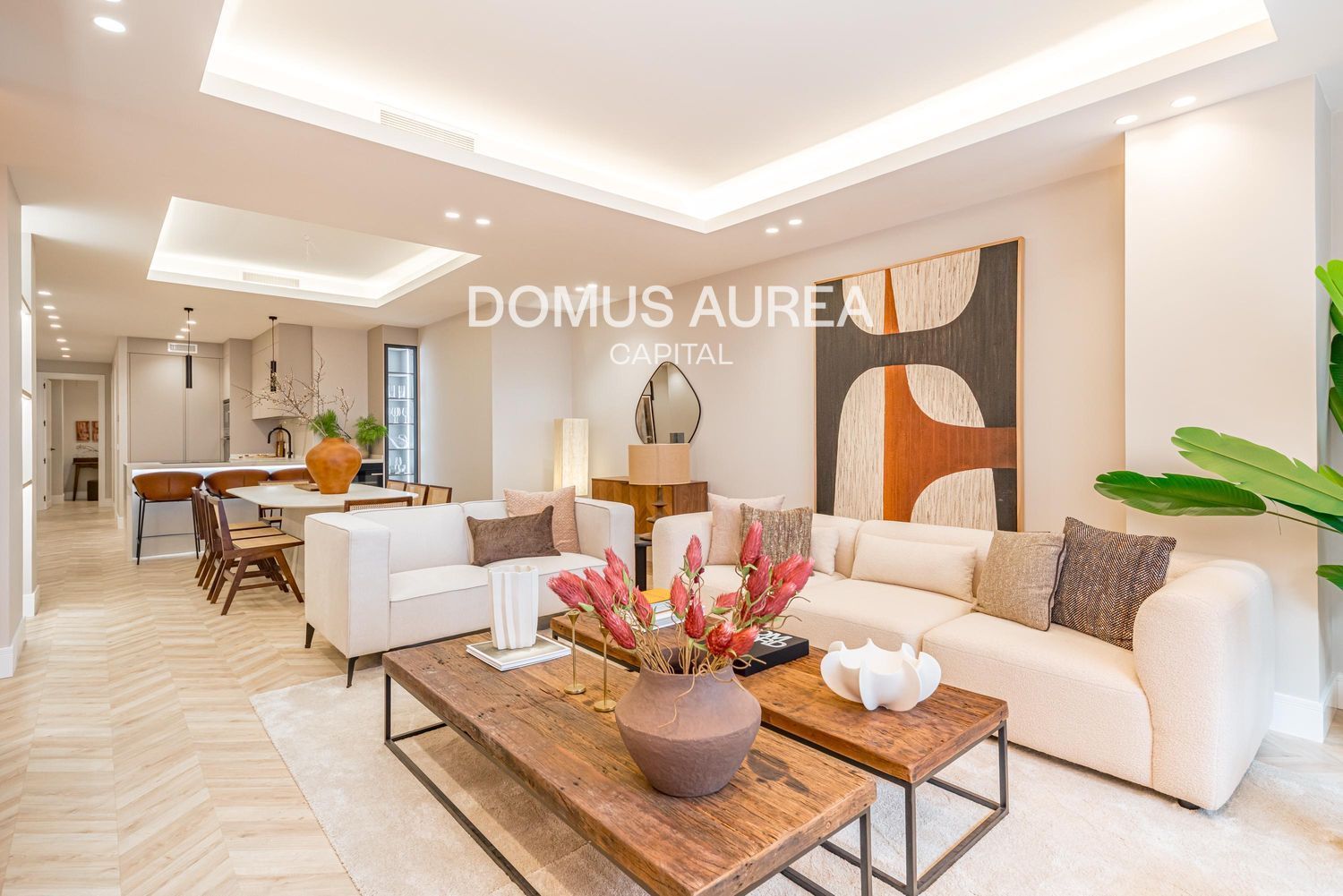
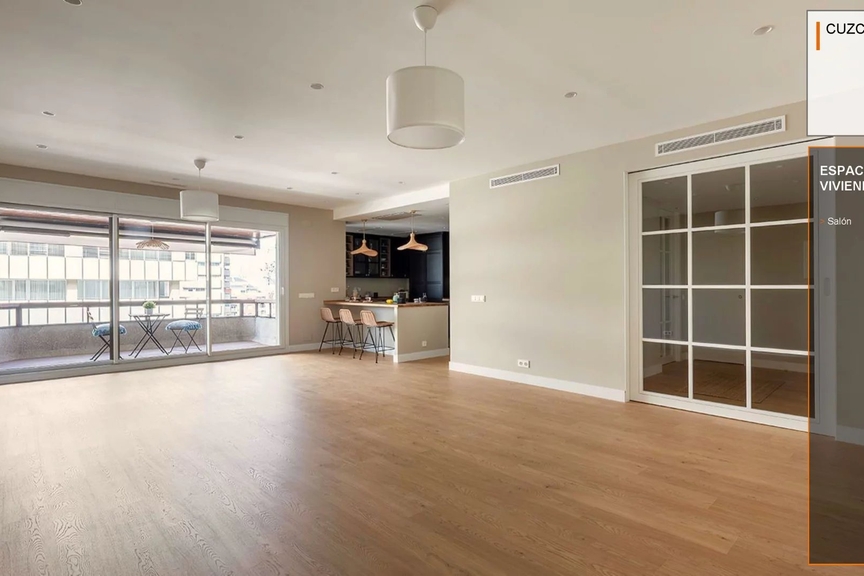
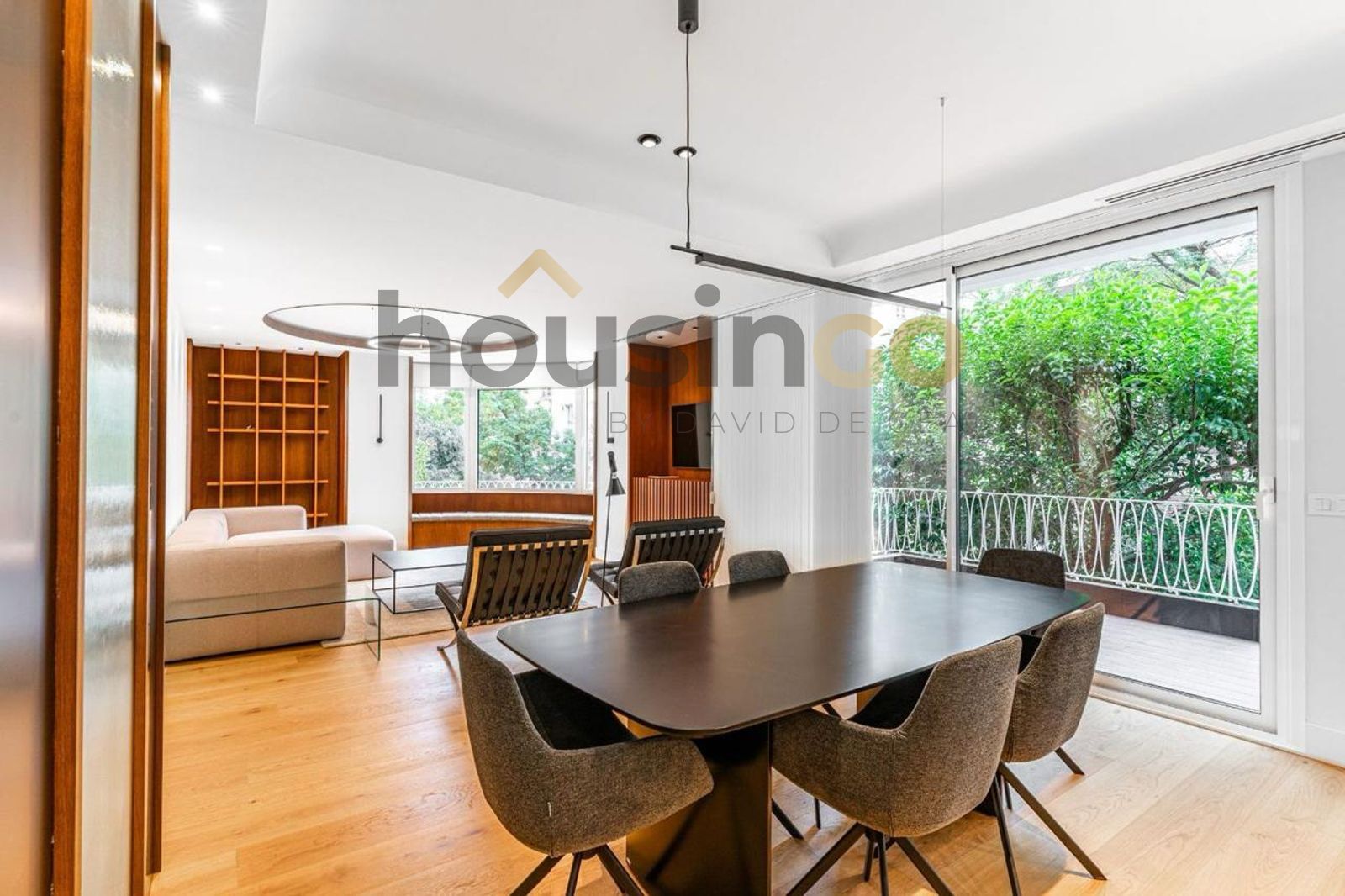
On a quiet street in Salamanca, this residence occupies the first floor of a recently renovated building, its classical facade concealing a thoroughly contemporary interior. The entrance opens into a wide hallway, where oak flooring and subtle lighting set the tone for the home’s understated refinement. From here, the space unfolds into a generous living and dining area, its high ceilings and large windows creating a sense of openness while maintaining a contained, intimate atmosphere.
Or contact Domus Aurea Capital ↗.
Salamanca
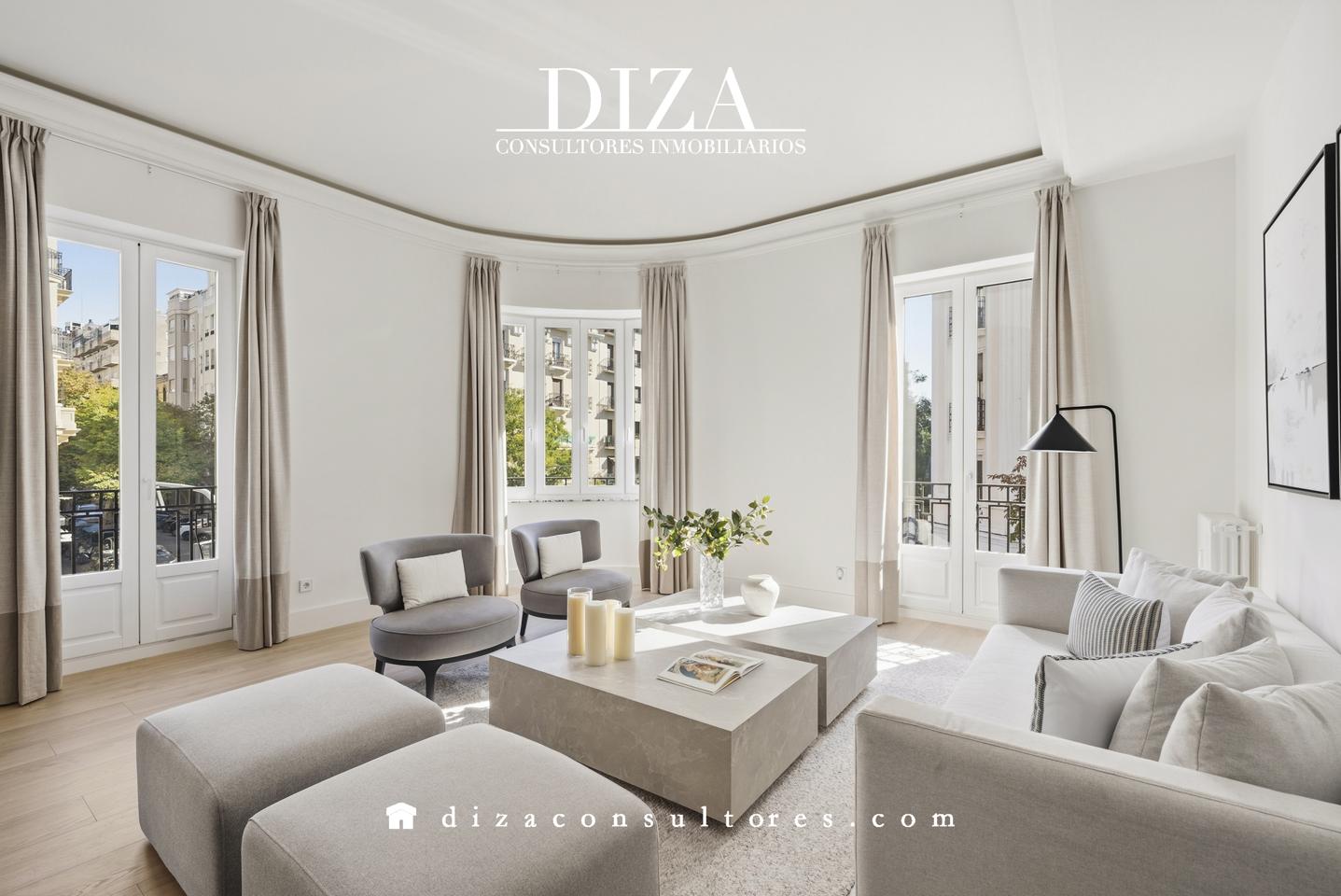
Salamanca sets both Madrid's price ceiling and its social register. Developed in the 19th century by the Marqués de Salamanca as a deliberate enclave for the capital's aristocracy and new industrial wealth, the district still functions that way — embassies, private banks, the Spanish flagships of every European luxury house, and the quiet buildings where old-money families have lived for generations. The grid is rectilinear and deliberate: wide pavements, ten-meter cornice heights, yellow-flowering jacarandas lining the avenues in April. The built form is uneven up close — protected-façade classics on the main avenues, unremarkable 1960s–70s infill on the side streets, a growing share of gut-renovations marketed as "obra nueva" — but the address is the product, and buyers are paying for it.