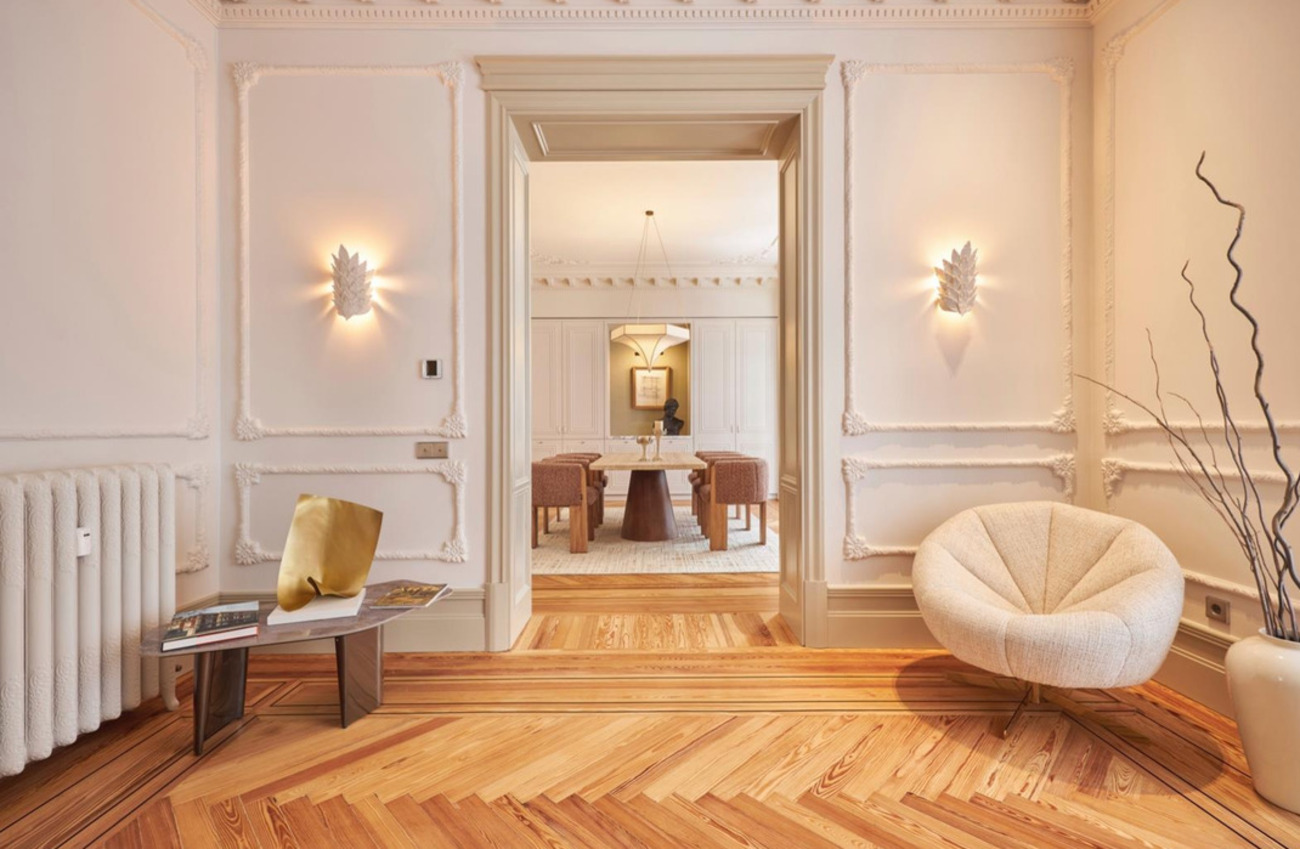
Within one of Madrid's most distinguished buildings in the Milla de Oro, this residence unfolds across 510 m² of carefully composed spaces. The property sits within an architectural landmark from the early 1900s, characterised by its carriage passage and three generous interior courtyards—a rare feature that brings light and air deep into the heart of the building. Soaring ceilings and original mouldings anchor the home to its elegant past, establishing the framework within which a considered contemporary renovation has been layered. The apartment balances period character with modern precision. Noble materials—melis pine floors, marble surfaces—flow throughout, chosen to complement rather than compete with the original architectural language. Contemporary systems and finishes are integrated discreetly, allowing the spatial generosity and natural proportions of the rooms to remain the primary experience. The sequence of living spaces develops with a fluid rhythm, each room connected yet distinct.
Or contact The Sibarist ↗.


Salamanca
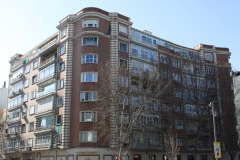
Salamanca sets both Madrid's price ceiling and its social register. Developed in the 19th century by the Marqués de Salamanca as a deliberate enclave for the capital's aristocracy and new industrial wealth, the district still functions that way — embassies, private banks, the Spanish flagships of every European luxury house, and the quiet buildings where old-money families have lived for generations. The grid is rectilinear and deliberate: wide pavements, ten-meter cornice heights, yellow-flowering jacarandas lining the avenues in April. The built form is uneven up close — protected-façade classics on the main avenues, unremarkable 1960s–70s infill on the side streets, a growing share of gut-renovations marketed as "obra nueva" — but the address is the product, and buyers are paying for it.