
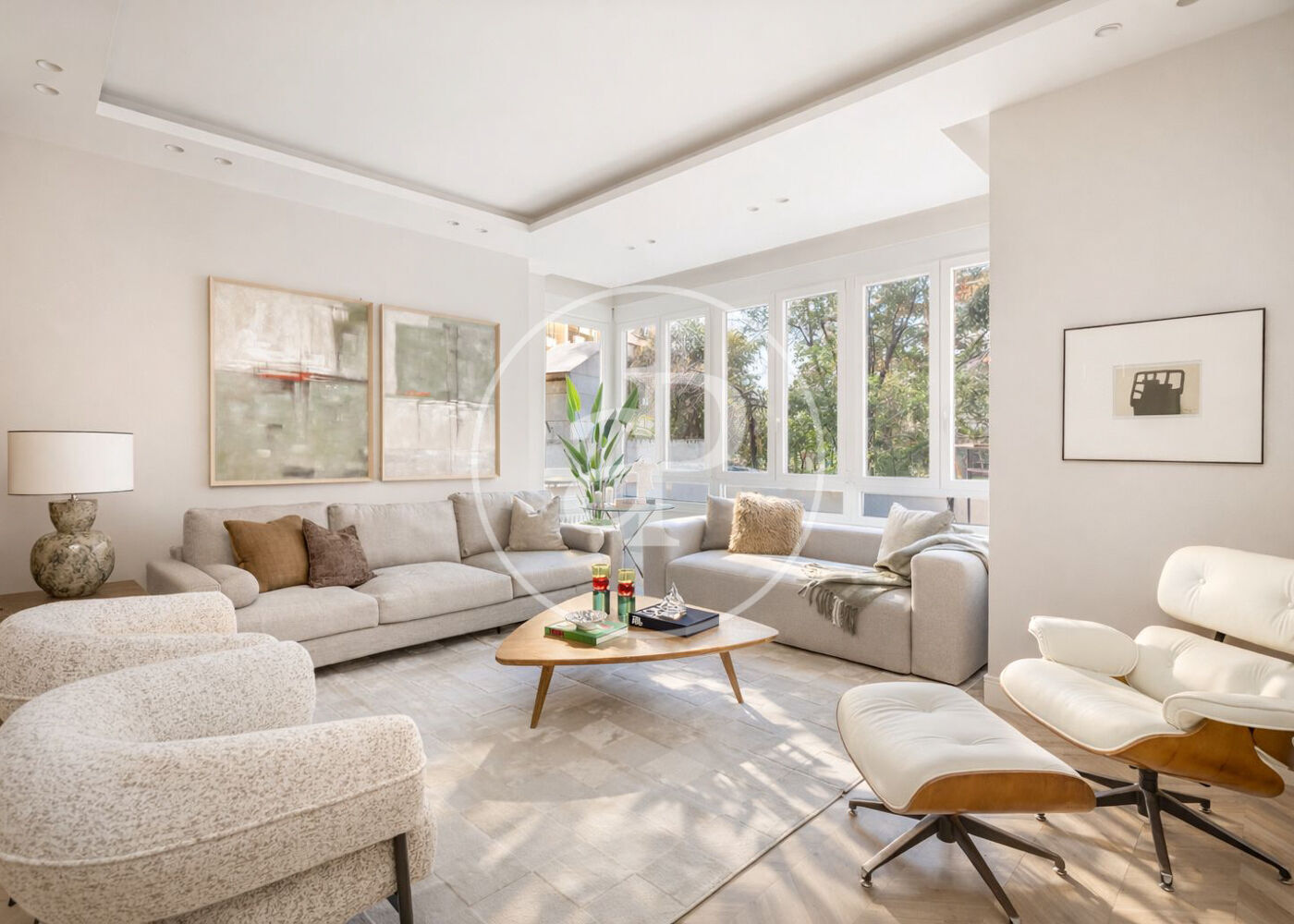
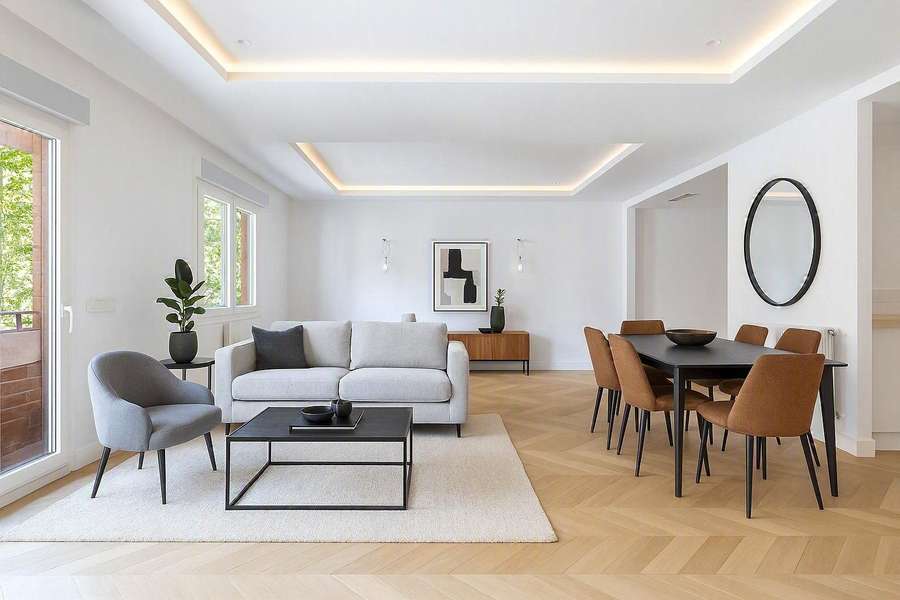
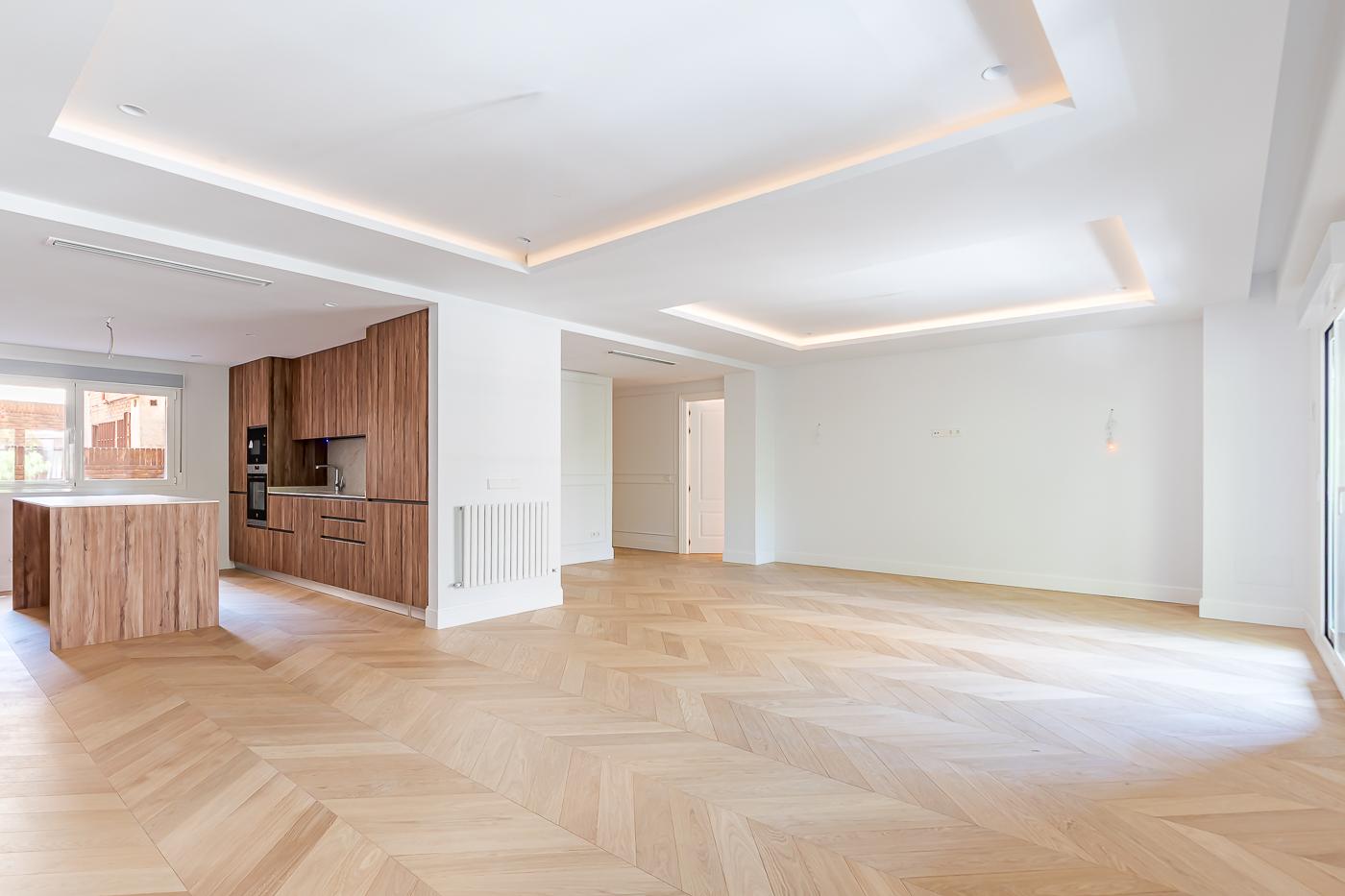
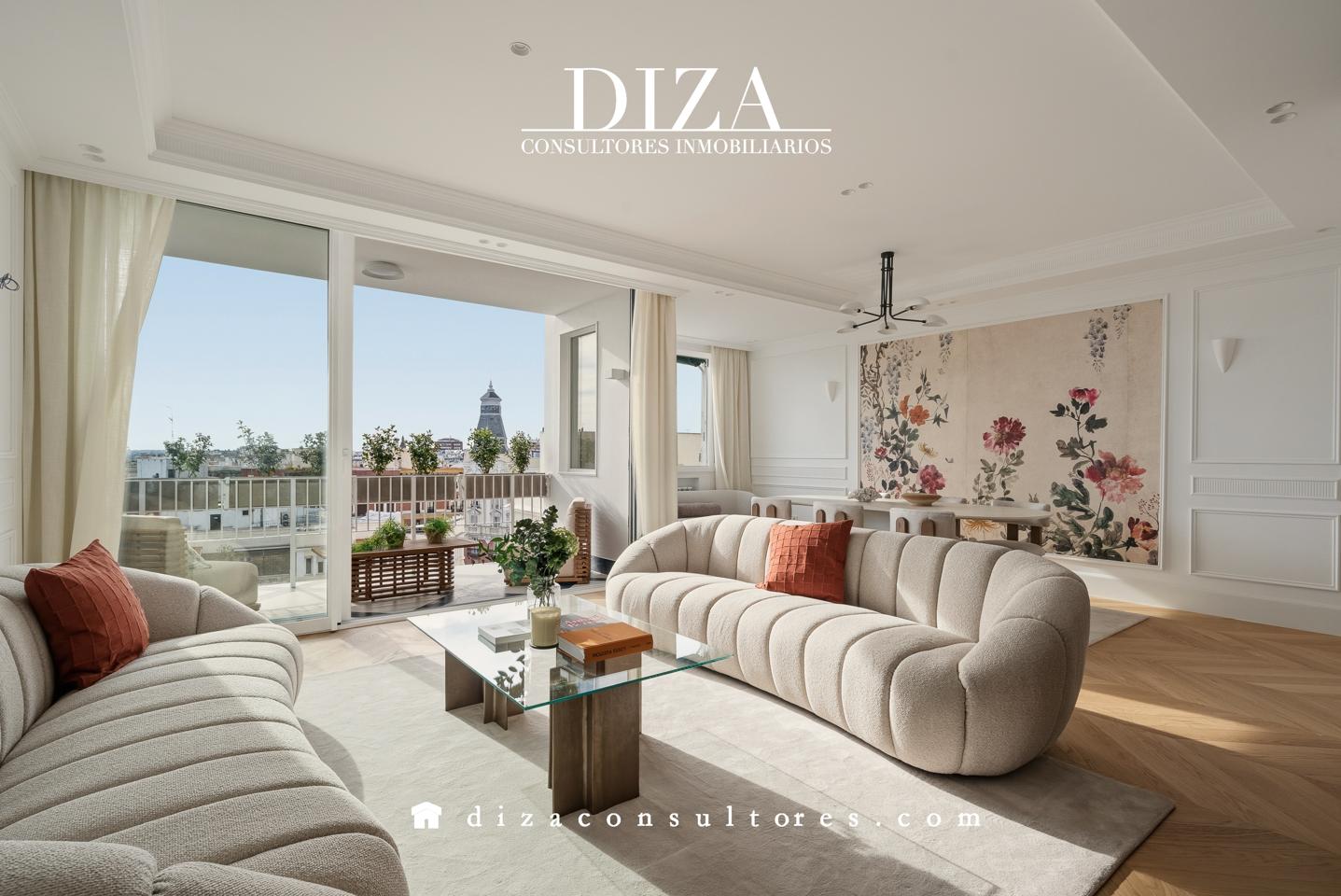
In the refined Almagro district, this residence occupies the ground floor of a 1905 period building, its classical facade concealing an interior of quiet distinction. The entrance opens into a generous hall that sets the tone for the home, with original details preserved alongside contemporary comforts. The living and dining areas unfold in a seamless sequence, anchored by high ceilings and large windows that draw in natural light. The kitchen, fitted with modern appliances, maintains a discreet presence within the layout. Three bedrooms, each with its own bathroom, are arranged to offer privacy and ease. The property retains the character of its era while adapting to the rhythms of modern life.
Or contact Otto Bayt ↗.
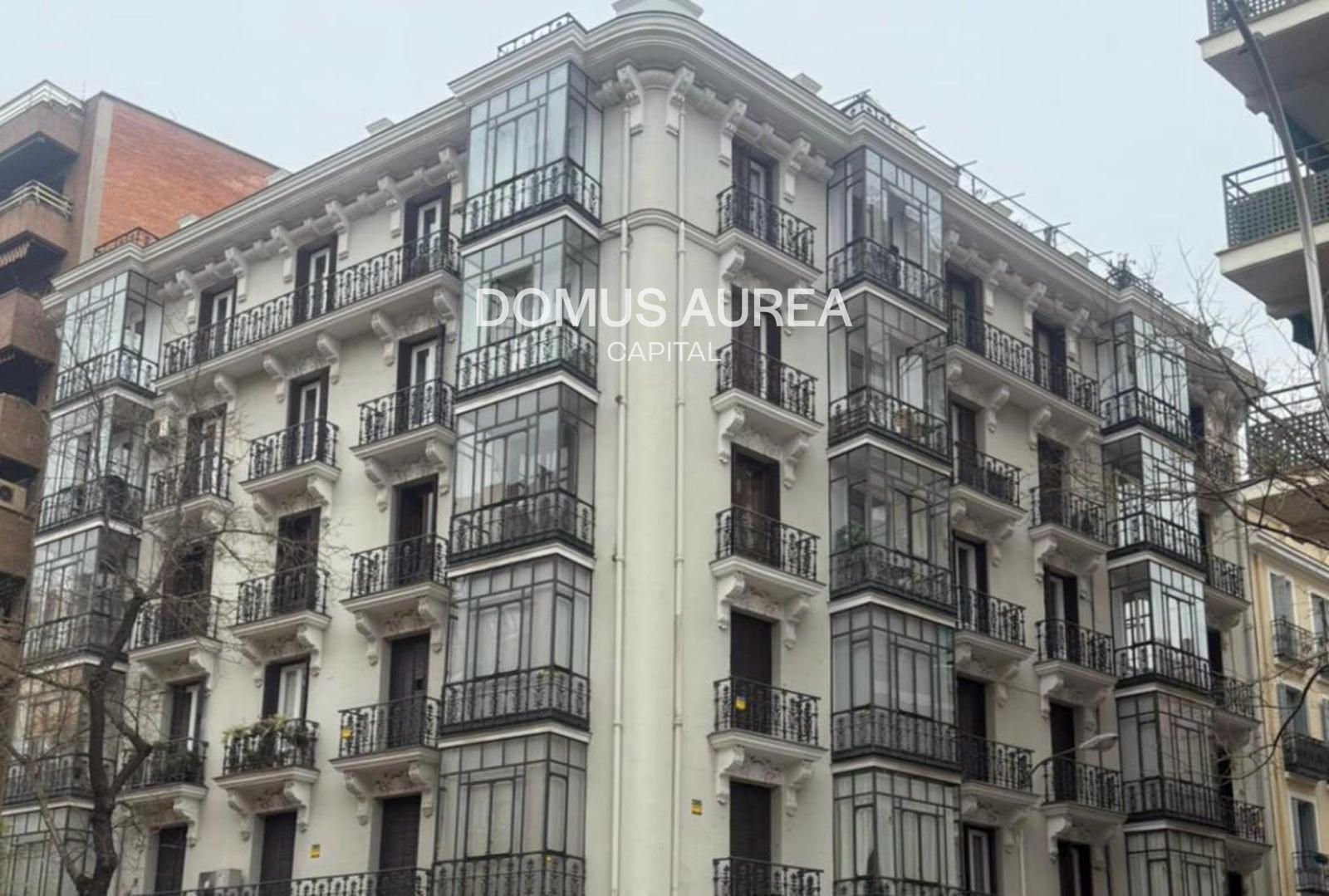

Almagro
Almagro is the quiet pocket tucked between Chamberí and the Castellana — a handful of blocks where old-money Spanish families, diplomats, and private-office founders have lived for generations. Streets like Calle Fortuny, Calle Zurbano, and Calle Almagro itself are lined with late-19th-century palacetes originally built as single-family residences, mostly subdivided into one or two full-floor apartments per building, with a few still in the hands of the founding families. The density of embassies and consulates per block is the highest in Madrid outside the formal diplomatic strip on Castellana. The housing stock is unusually homogeneous for central Madrid — stone-and-brick façades, 3–4m ceilings, original wrought-iron balustrades — and apartments run large, 180–400 m² being typical.