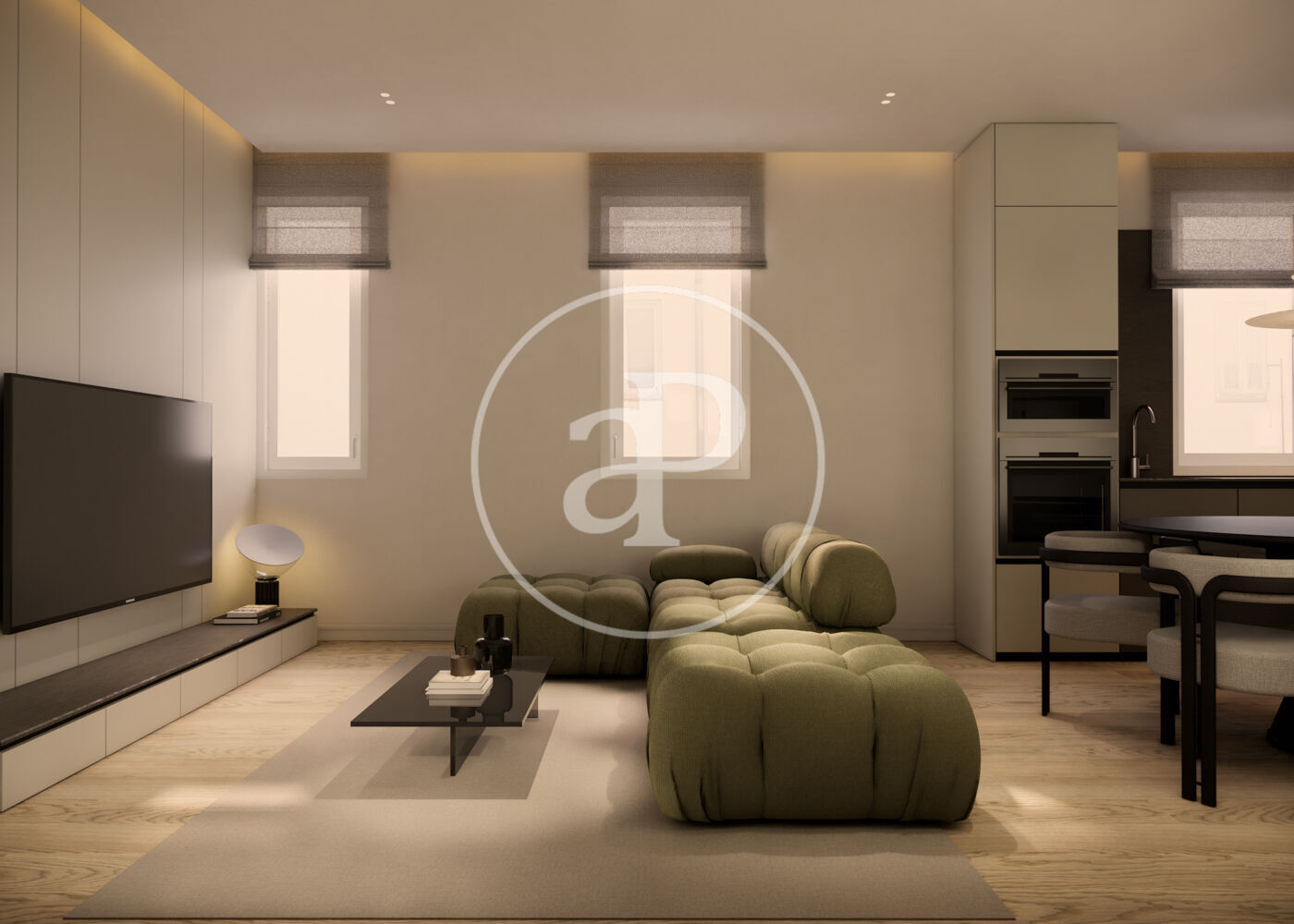
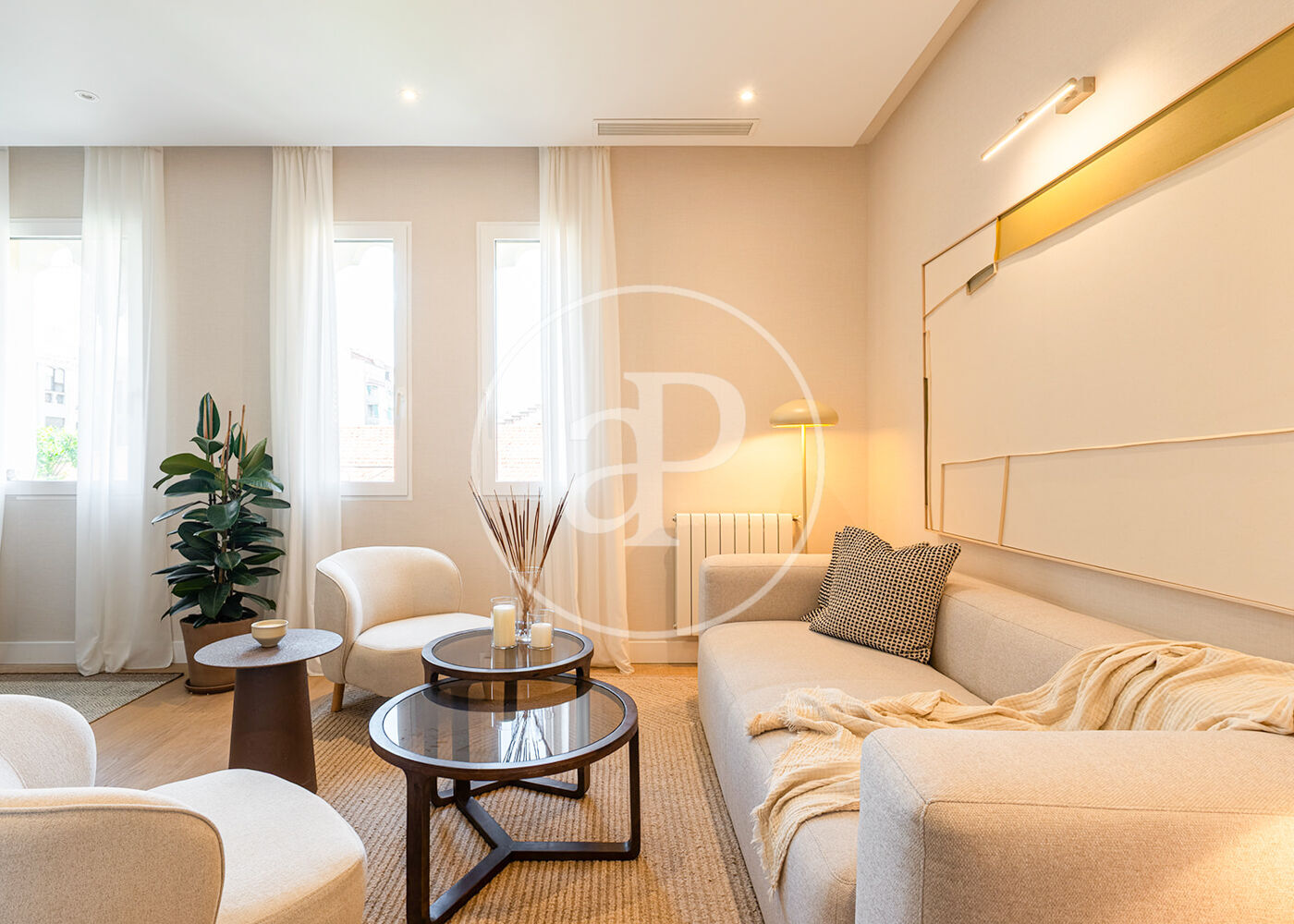
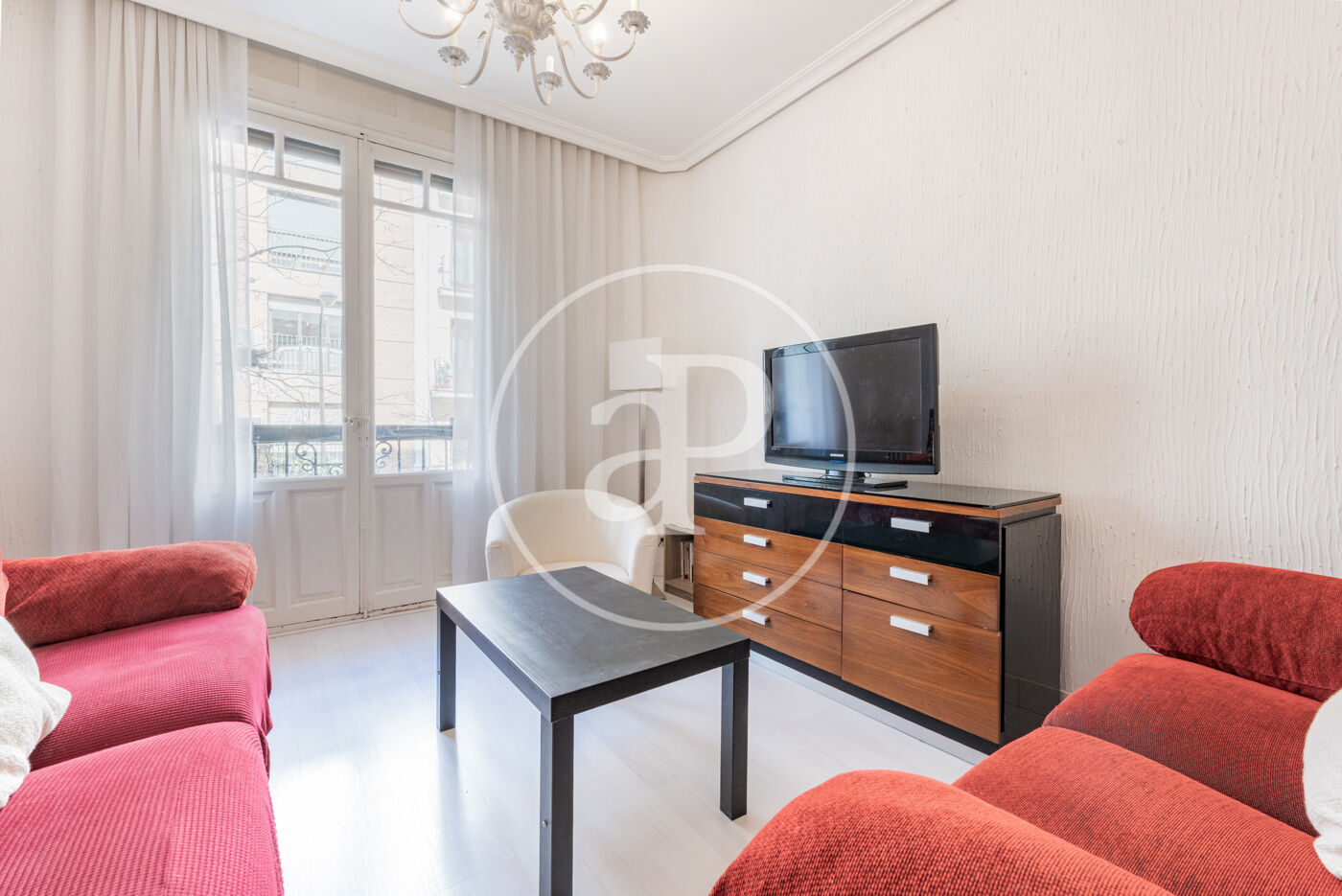
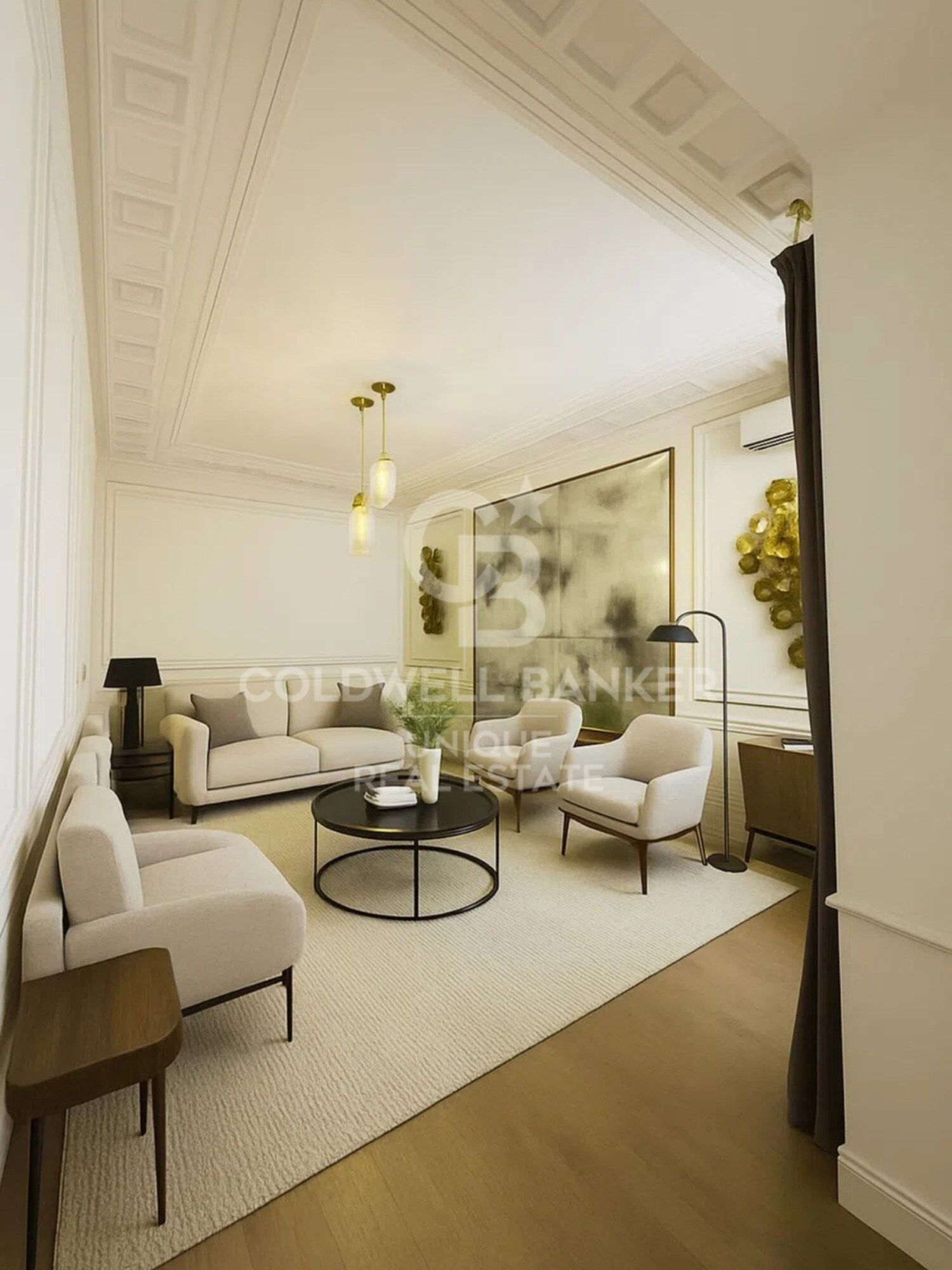
Almagro, one of Chamberí's most established residential neighbourhoods, sits at the intersection of Madrid's architectural heritage and contemporary urban life. This apartment on the sixth floor of a period building retains the proportions and detail characteristic of its era, while offering an opportunity to reconfigure the interior according to contemporary needs. The 93 m² layout comprises two bedrooms and three bathrooms, with a terrace that extends the living space outward. Natural light enters from multiple exposures. The building benefits from lift access, a practical addition to a classic structure. The property requires renovation work, presenting scope to introduce updated systems, finishes and layouts while preserving the original character of the bones.
Almagro
Almagro is the quiet pocket tucked between Chamberí and the Castellana — a handful of blocks where old-money Spanish families, diplomats, and private-office founders have lived for generations. Streets like Calle Fortuny, Calle Zurbano, and Calle Almagro itself are lined with late-19th-century palacetes originally built as single-family residences, mostly subdivided into one or two full-floor apartments per building, with a few still in the hands of the founding families. The density of embassies and consulates per block is the highest in Madrid outside the formal diplomatic strip on Castellana. The housing stock is unusually homogeneous for central Madrid — stone-and-brick façades, 3–4m ceilings, original wrought-iron balustrades — and apartments run large, 180–400 m² being typical.