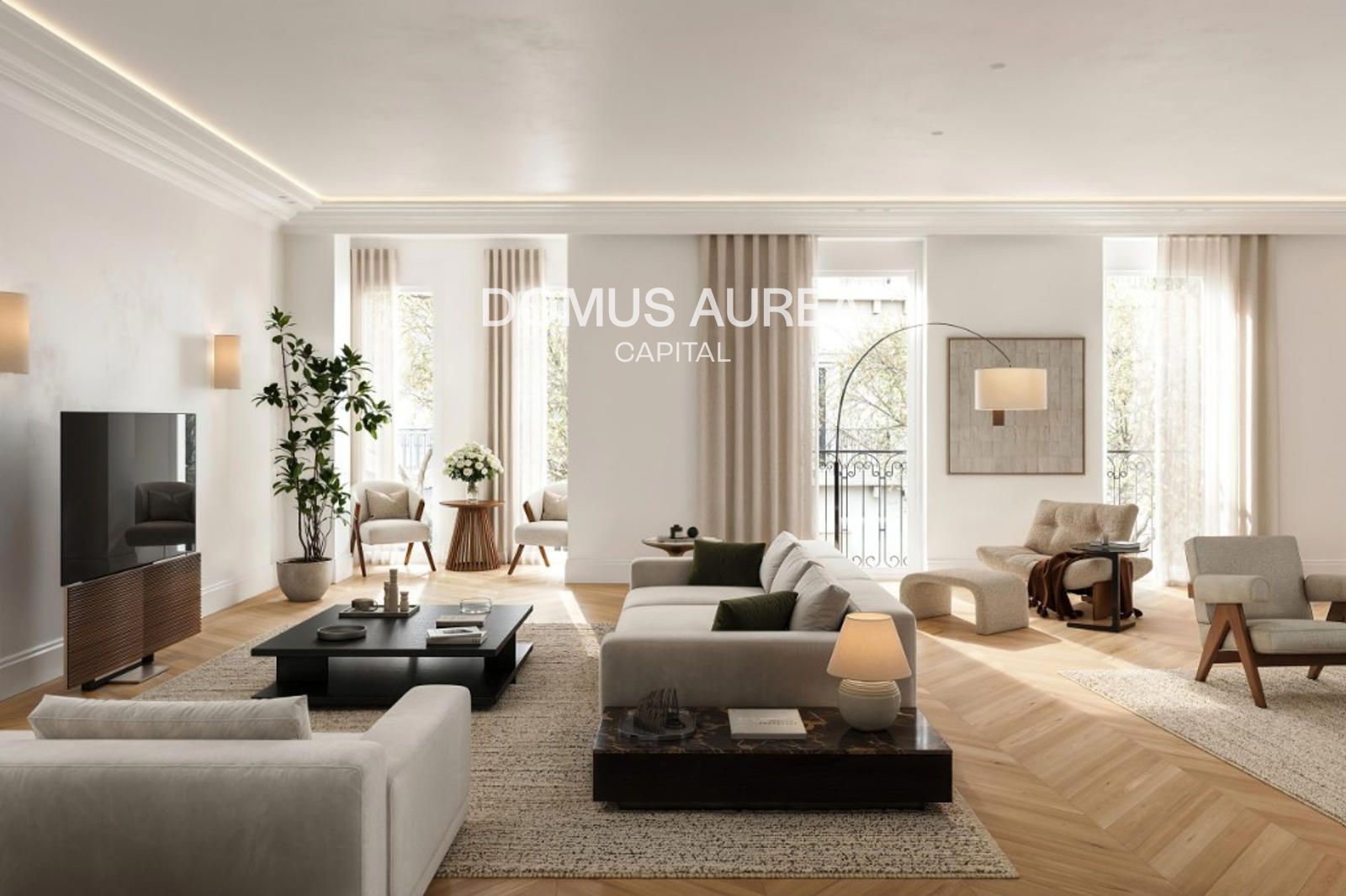
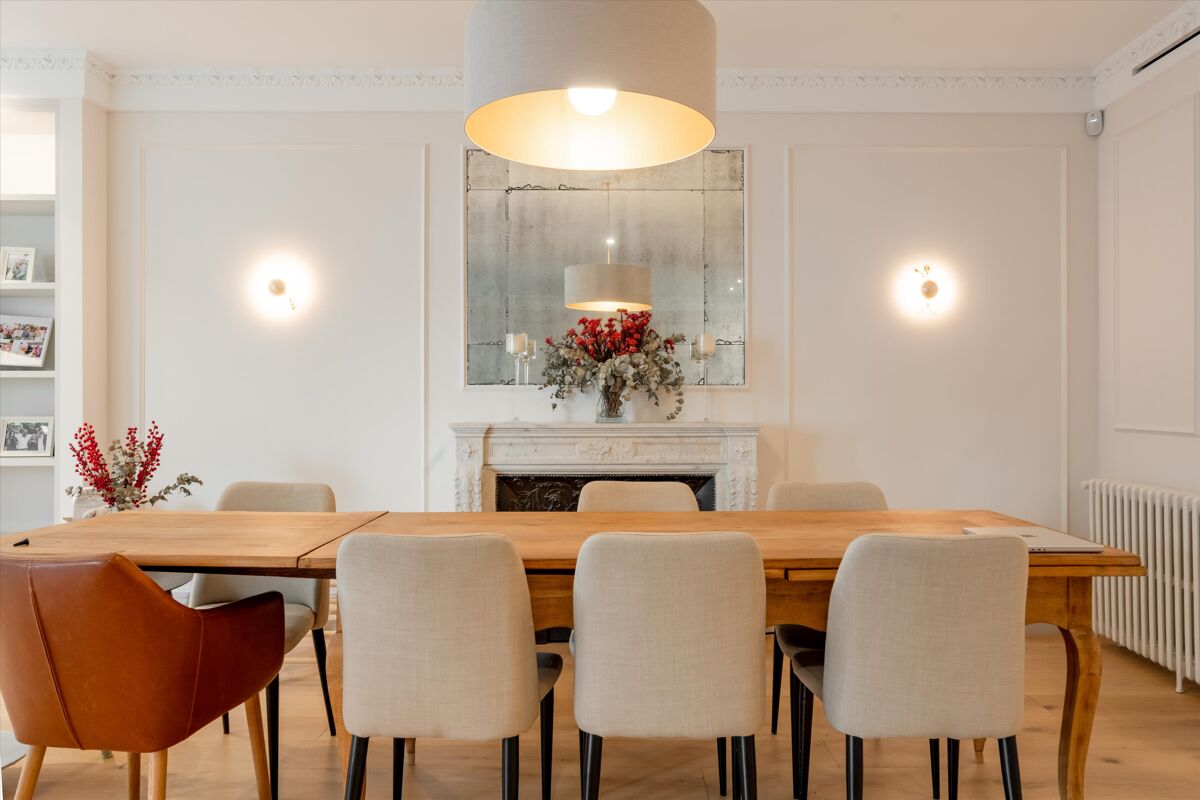
In the refined Almagro district, this apartment occupies the fifth floor of a distinguished 1940s building, its classical lines framing a residence of quiet contemporary elegance. The home unfolds across a generous, light-filled layout, with an exterior orientation that draws in natural brightness throughout the day. A terrace extends the living space outward, offering a private connection to the city’s sky and light. Oak floors run seamlessly between rooms, grounding the interiors in warmth and continuity. The sequence moves from a welcoming entrance to the central living and dining areas, where high ceilings and large windows create a sense of openness. The kitchen, finished with natural stone and integrated cabinetry, sits as a functional yet understated anchor. The sleeping quarters ar…




Almagro
Almagro is the quiet pocket tucked between Chamberí and the Castellana — a handful of blocks where old-money Spanish families, diplomats, and private-office founders have lived for generations. Streets like Calle Fortuny, Calle Zurbano, and Calle Almagro itself are lined with late-19th-century palacetes originally built as single-family residences, mostly subdivided into one or two full-floor apartments per building, with a few still in the hands of the founding families. The density of embassies and consulates per block is the highest in Madrid outside the formal diplomatic strip on Castellana. The housing stock is unusually homogeneous for central Madrid — stone-and-brick façades, 3–4m ceilings, original wrought-iron balustrades — and apartments run large, 180–400 m² being typical.