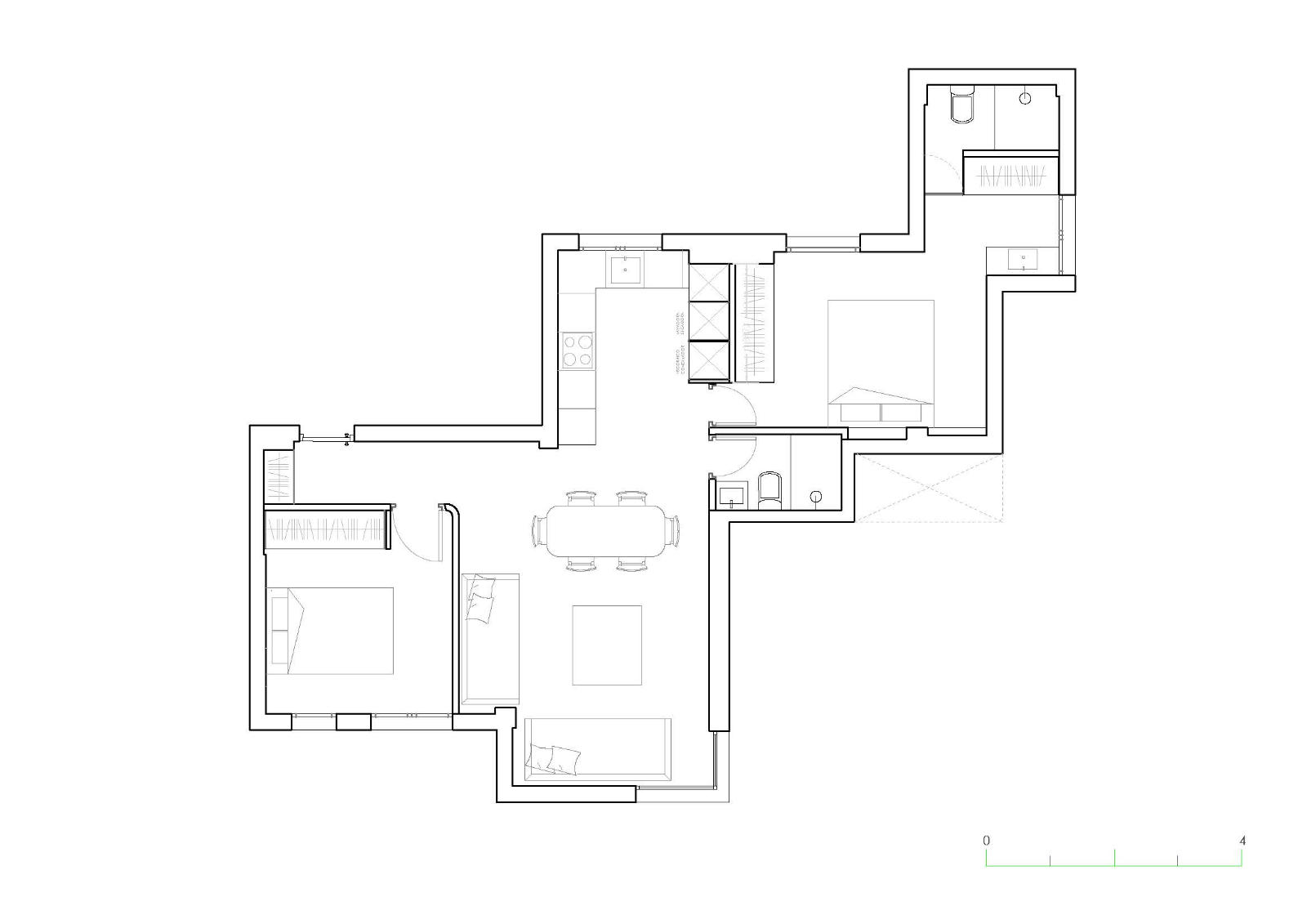
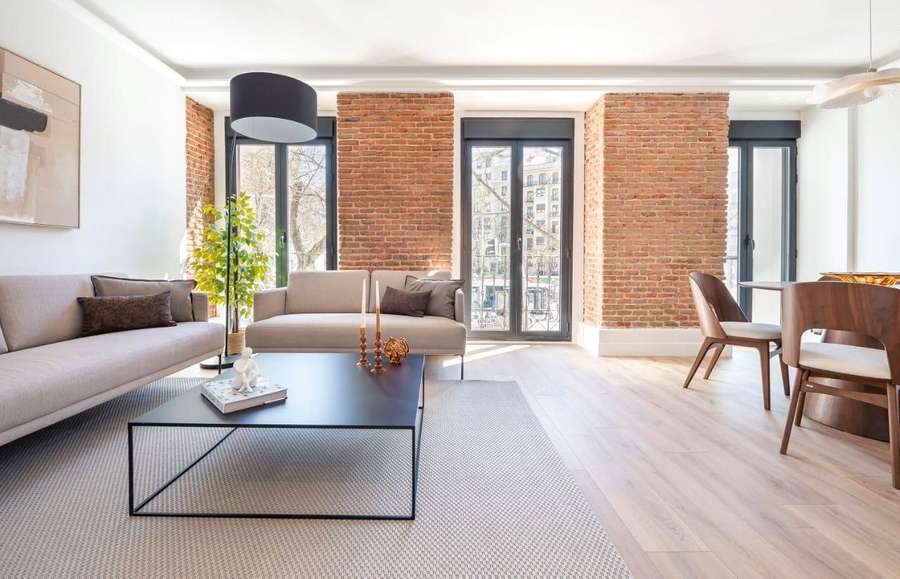
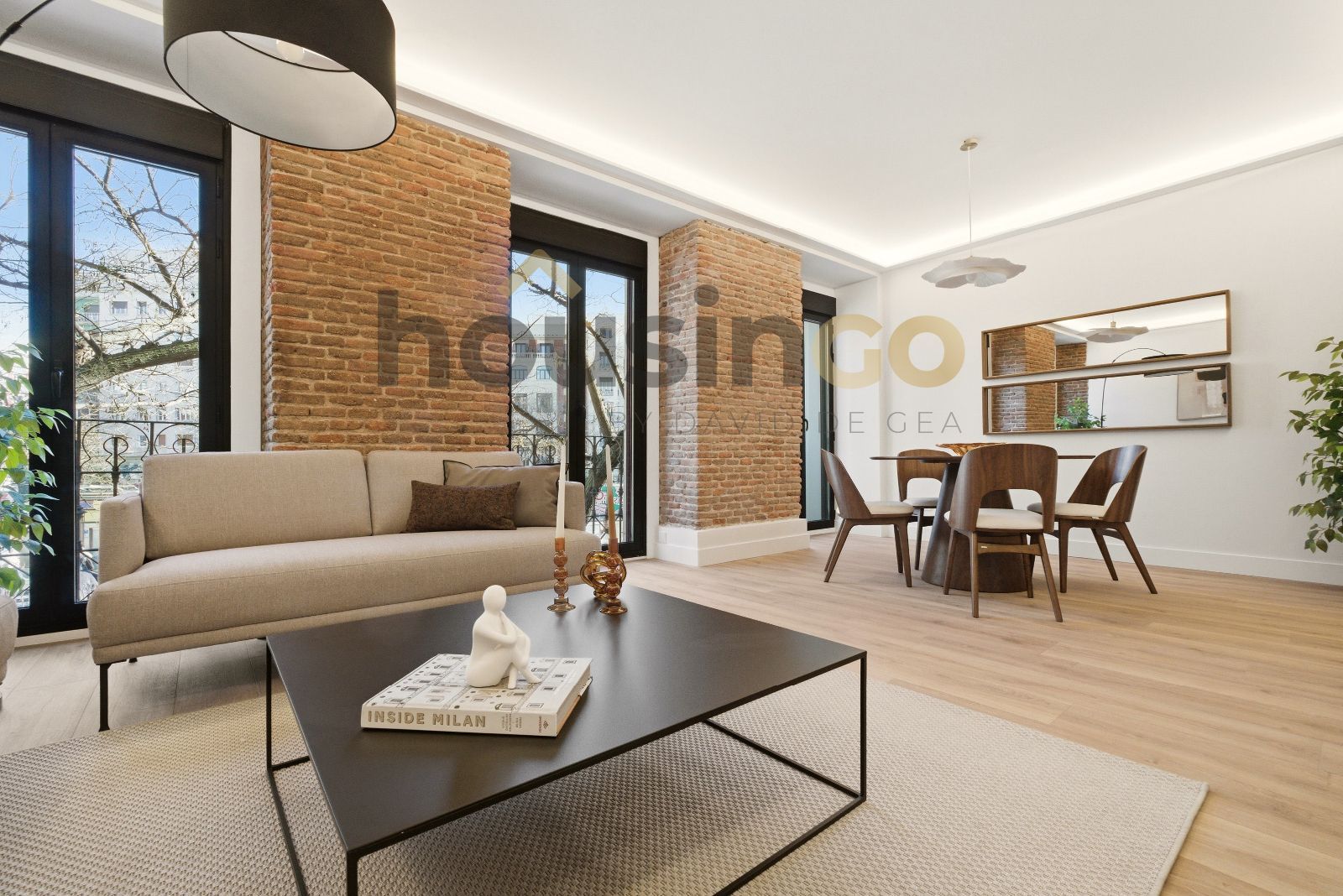
On a quiet street in Salamanca, Maldonado II occupies the second floor of a 1940s building, its exterior facade preserved while the interior is reimagined for contemporary living. The apartment opens into a hallway lined with oak panelling, introducing the material consistency that defines the home. The living and dining areas unfold in a single volume, with large windows drawing natural light across the space. The kitchen, positioned at the far end, is conceived as a self-contained island, finished in matte lacquer and natural stone. From here, the sequence continues to the private quarters: two bedrooms, each with its own bathroom, the main suite featuring a walk-in wardrobe. Oak flooring and integrated lighting run throughout, reinforcing a sense of continuity and calm.
Or contact Ivory Homes ↗.
Also listed at: AProperties, Olisson Club, De Salas, Walter Haus, Housingo, Diza Consultores, Savills Spain.


Salamanca
Salamanca sets both Madrid's price ceiling and its social register. Developed in the 19th century by the Marqués de Salamanca as a deliberate enclave for the capital's aristocracy and new industrial wealth, the district still functions that way — embassies, private banks, the Spanish flagships of every European luxury house, and the quiet buildings where old-money families have lived for generations. The grid is rectilinear and deliberate: wide pavements, ten-meter cornice heights, yellow-flowering jacarandas lining the avenues in April. The built form is uneven up close — protected-façade classics on the main avenues, unremarkable 1960s–70s infill on the side streets, a growing share of gut-renovations marketed as "obra nueva" — but the address is the product, and buyers are paying for it.