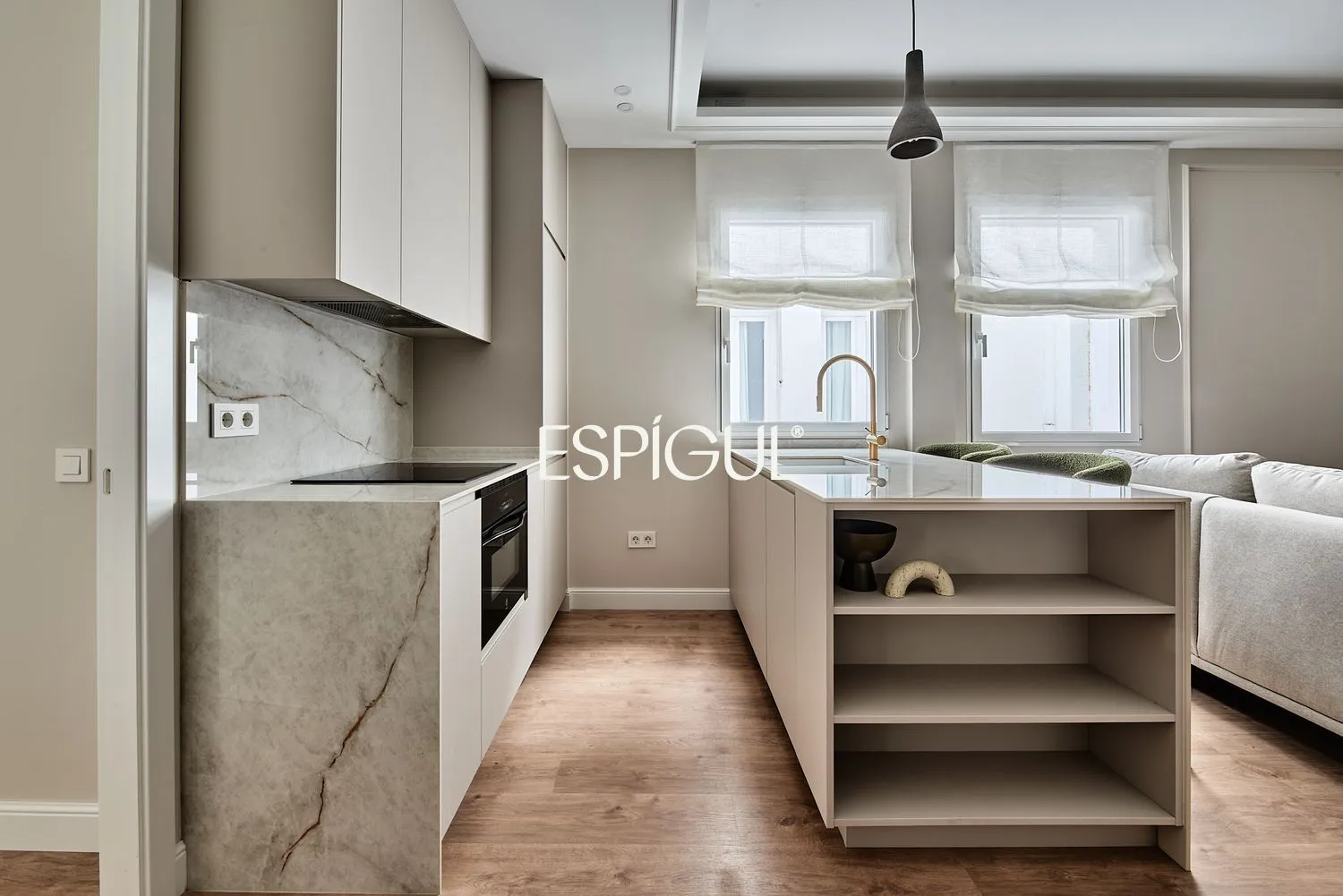
On Juan Bravo, in the heart of Salamanca, a newly renovated apartment occupies a refined 1950s building with lift access. The entrance leads into a living and dining area defined by clean lines and natural light, where oak floors and a restrained material palette create a sense of continuity and warmth. The open kitchen integrates seamlessly, with stone surfaces and tailored cabinetry that extend the home’s quiet elegance.
Or contact Espígul ↗.


Salamanca
Salamanca sets both Madrid's price ceiling and its social register. Developed in the 19th century by the Marqués de Salamanca as a deliberate enclave for the capital's aristocracy and new industrial wealth, the district still functions that way — embassies, private banks, the Spanish flagships of every European luxury house, and the quiet buildings where old-money families have lived for generations. The grid is rectilinear and deliberate: wide pavements, ten-meter cornice heights, yellow-flowering jacarandas lining the avenues in April. The built form is uneven up close — protected-façade classics on the main avenues, unremarkable 1960s–70s infill on the side streets, a growing share of gut-renovations marketed as "obra nueva" — but the address is the product, and buyers are paying for it.