
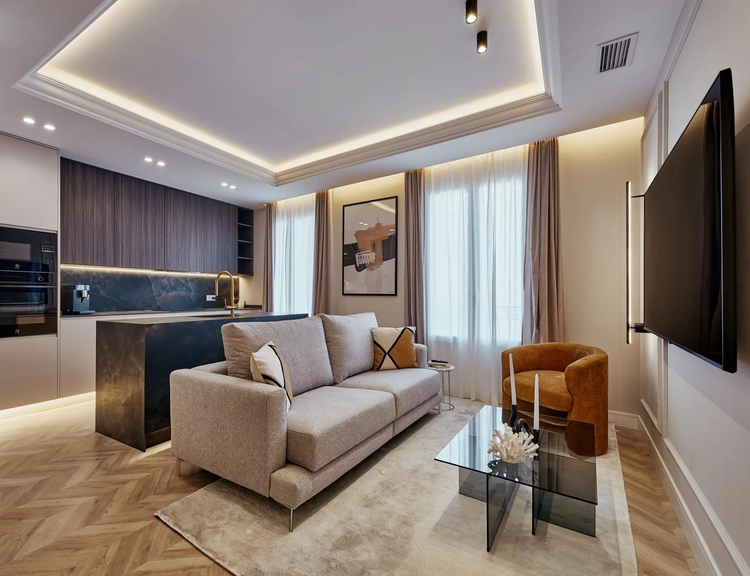
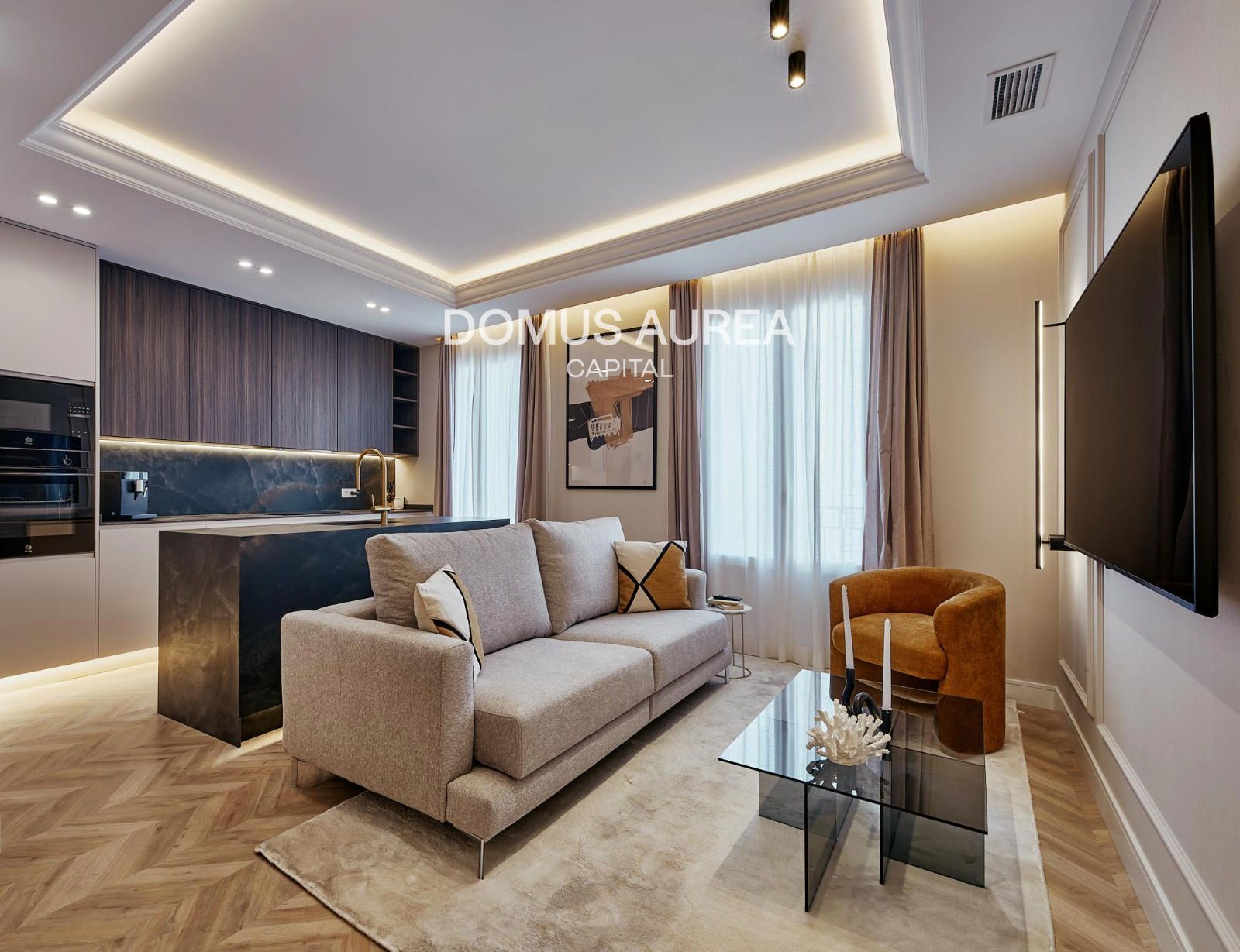
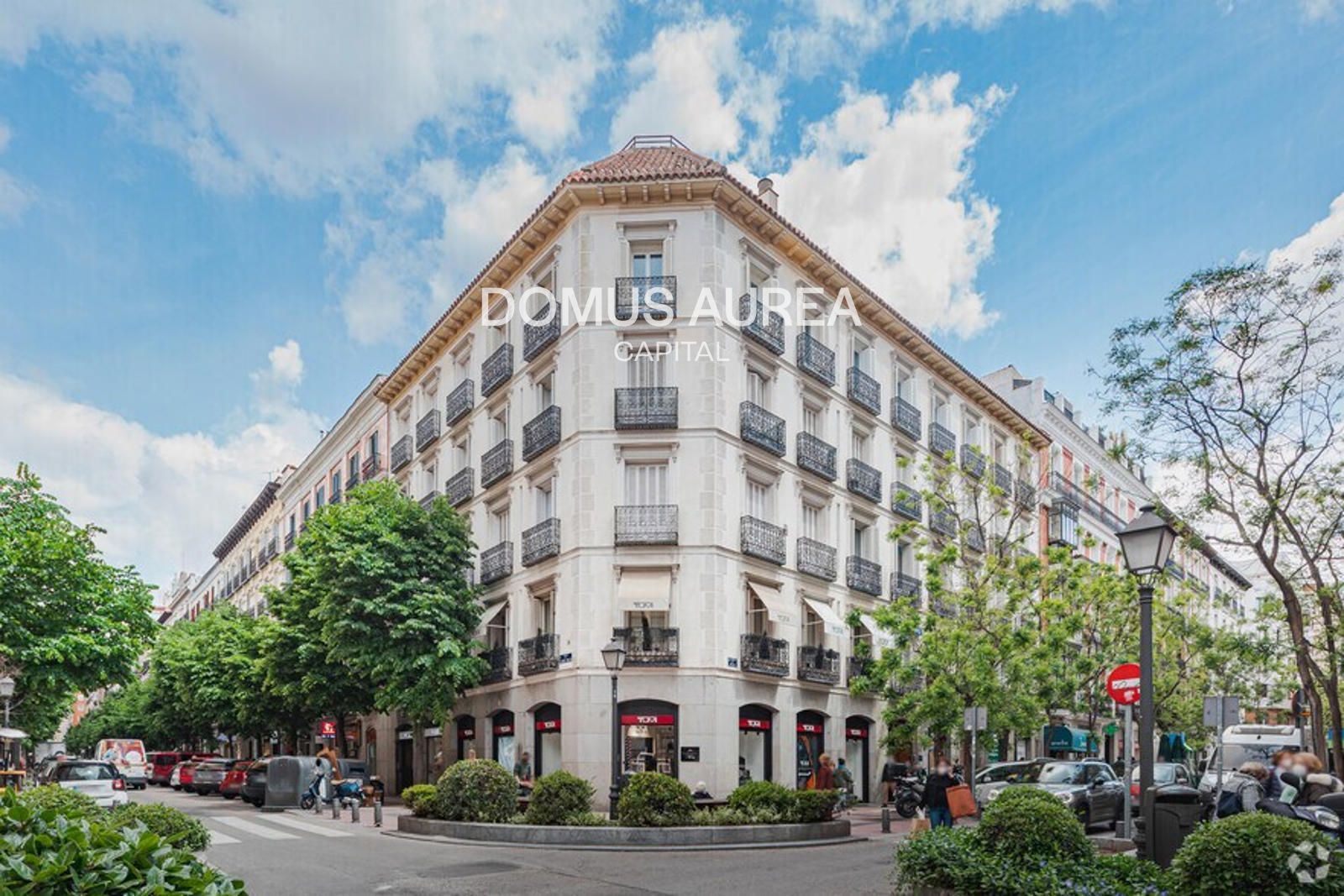
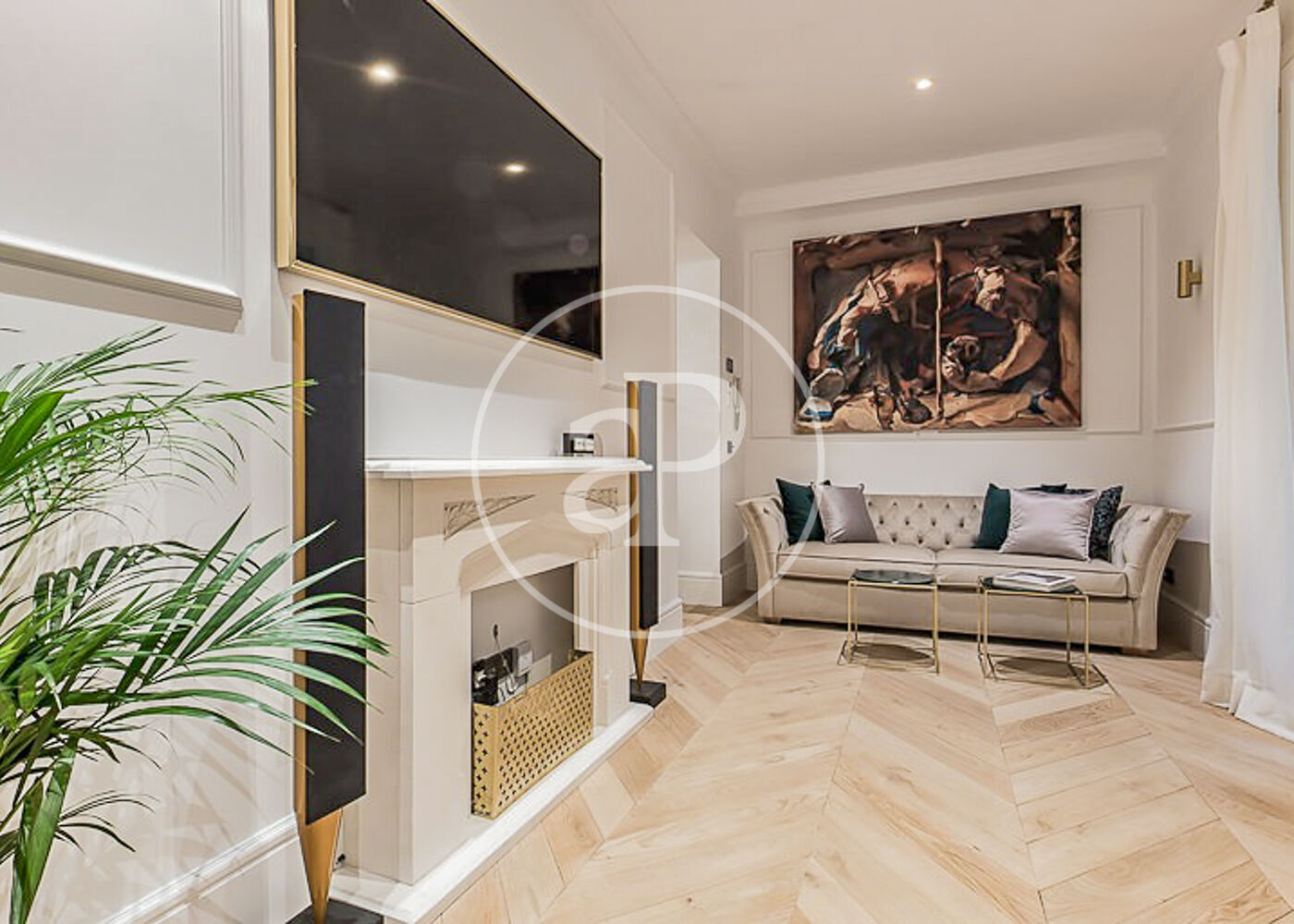
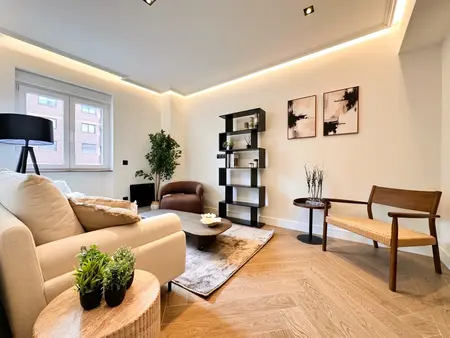
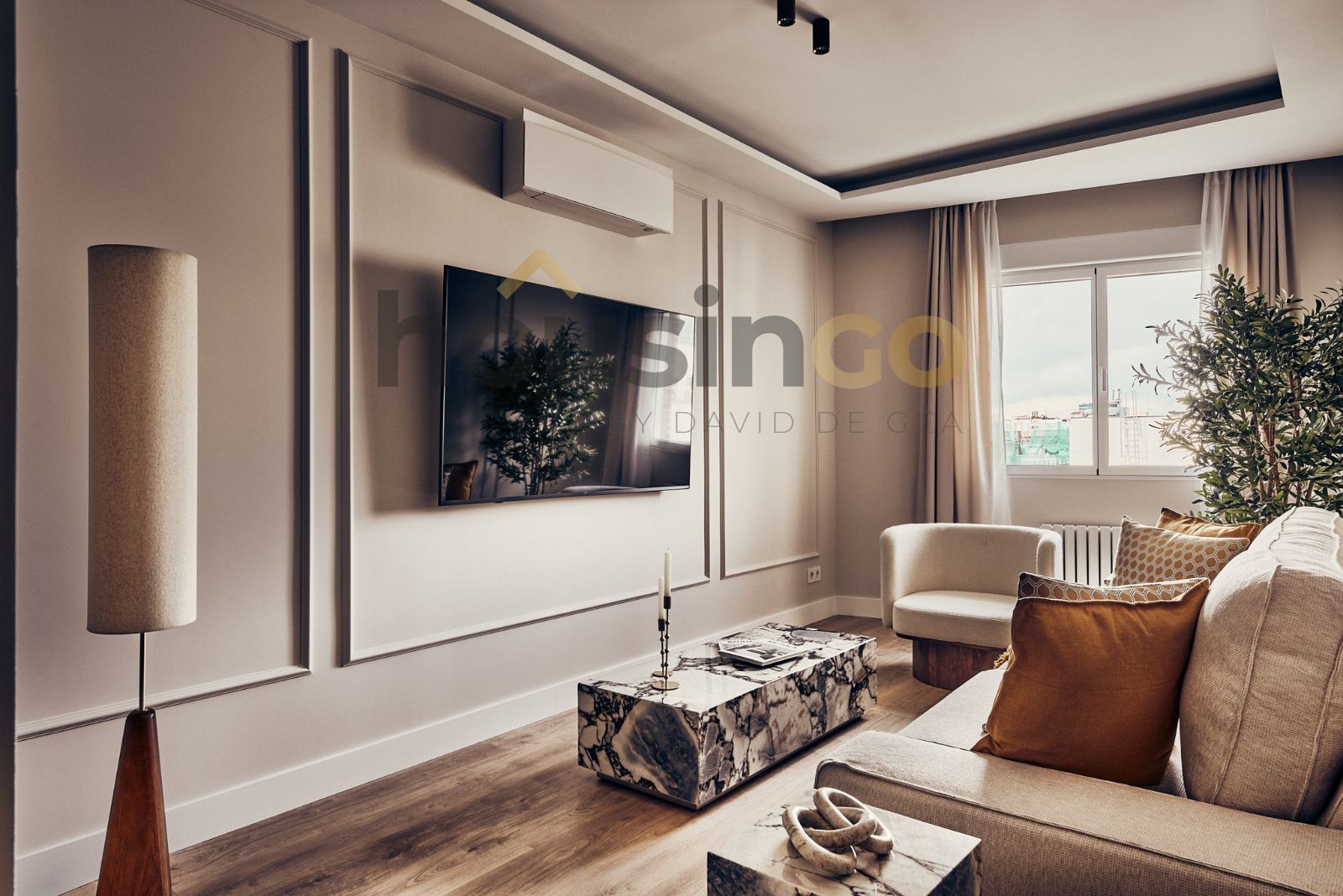
On a quiet street in the heart of Salamanca, this apartment occupies the second floor of a distinguished mid-century building. The renovation has been carried out with a clear architectural intention: to preserve the elegance of the original structure while introducing a contemporary language of light and materiality. The entrance leads directly into an open living and dining area, where oak flooring and custom millwork establish a warm, cohesive atmosphere. A full-height bookshelf divides the space without closing it, maintaining visual continuity between the social areas and the kitchen beyond. The kitchen, finished in matte lacquer and natural stone, is designed for both daily use and entertaining, with integrated appliances and a central island that doubles as a casual dining surface. The private wing unfolds along a corridor lined with built-in storage, leading to two bedrooms and two bathrooms. The main suite is oriented toward the interior courtyard, offering quiet and privacy. Its bathroom is finished in large-format porcelain tiles and features a walk-in shower with a frameless glass enclosure. The second bedroom, equally generous in proportion, shares access to a second bathroom, conceived as a more compact yet equally refined space. Throughout, details such as concealed lighting, flush-mounted doors, and precise joinery contribute to a sense of quiet sophistication. The apartment is served by a lift and benefits from natural light across all principal rooms, reinforcing the sense of openness within its contained footprint.
Salamanca
Salamanca sets both Madrid's price ceiling and its social register. Developed in the 19th century by the Marqués de Salamanca as a deliberate enclave for the capital's aristocracy and new industrial wealth, the district still functions that way — embassies, private banks, the Spanish flagships of every European luxury house, and the quiet buildings where old-money families have lived for generations. The grid is rectilinear and deliberate: wide pavements, ten-meter cornice heights, yellow-flowering jacarandas lining the avenues in April. The built form is uneven up close — protected-façade classics on the main avenues, unremarkable 1960s–70s infill on the side streets, a growing share of gut-renovations marketed as "obra nueva" — but the address is the product, and buyers are paying for it.