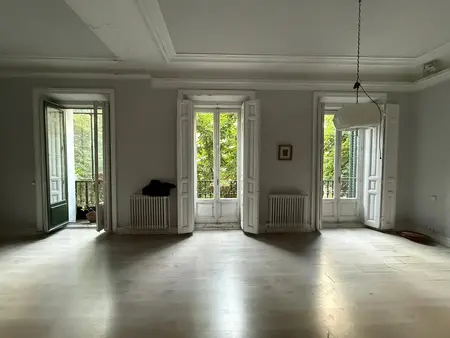
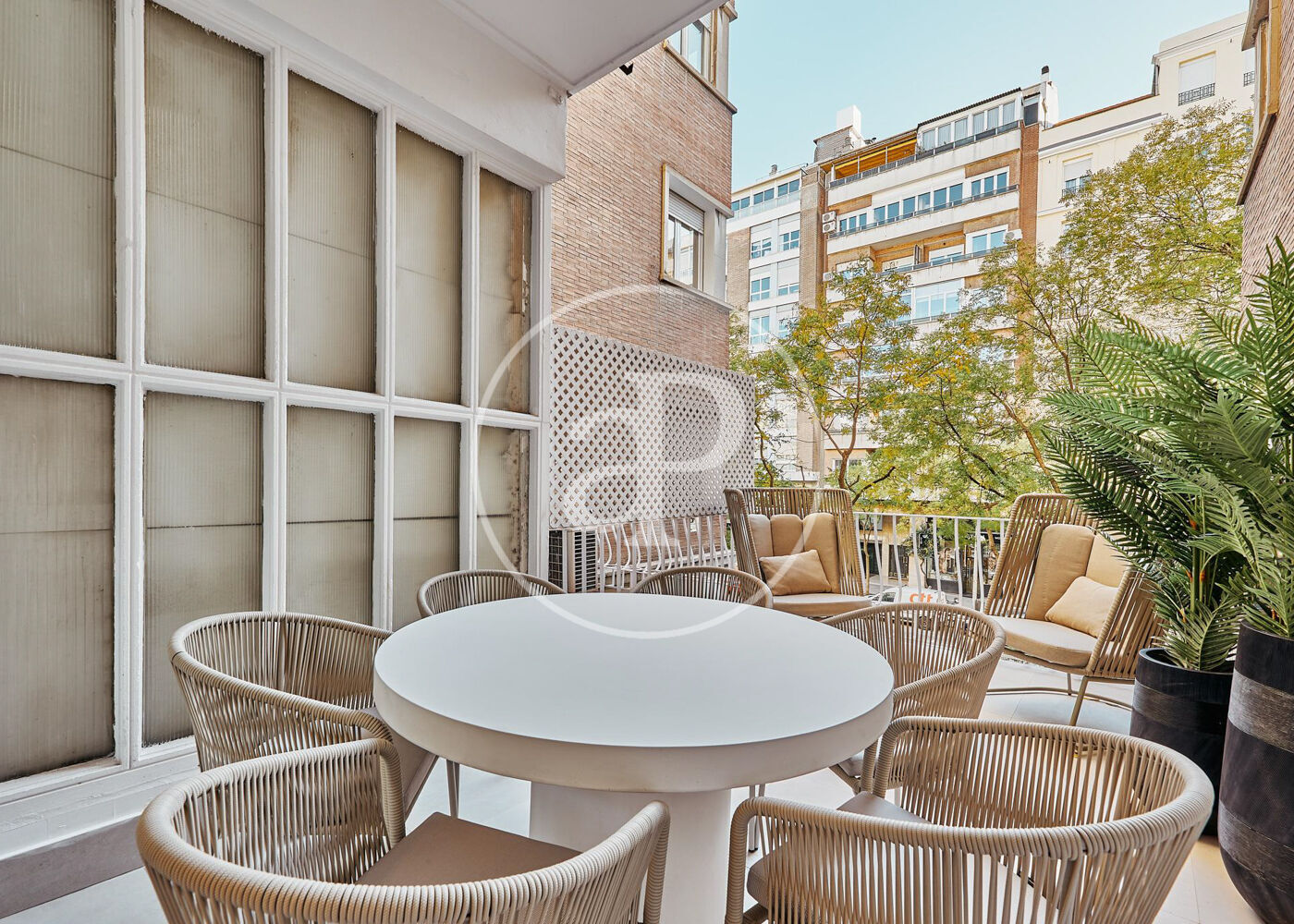
In Salamanca's Lista neighbourhood, this 1964 building holds two connected properties on the eighth and fourth floors, with south-facing orientation and lift access. Together they comprise ten bedrooms and four bathrooms across 230 m², currently operating as furnished rooms—a configuration that has established immediate rental income without requiring further capital investment. Each apartment is fitted with two bathrooms and a spacious kitchen, with particular attention given to the size and natural light of the bedrooms. The properties are sold as a unified portfolio, ready to continue generating returns under their present operational model, or to be reconfigured as two independent family residences in one of Madrid's most established neighbourhoods.
Or contact Engel & Völkers ↗.
Salamanca
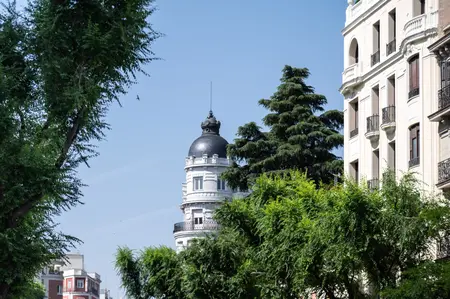
Salamanca sets both Madrid's price ceiling and its social register. Developed in the 19th century by the Marqués de Salamanca as a deliberate enclave for the capital's aristocracy and new industrial wealth, the district still functions that way — embassies, private banks, the Spanish flagships of every European luxury house, and the quiet buildings where old-money families have lived for generations. The grid is rectilinear and deliberate: wide pavements, ten-meter cornice heights, yellow-flowering jacarandas lining the avenues in April. The built form is uneven up close — protected-façade classics on the main avenues, unremarkable 1960s–70s infill on the side streets, a growing share of gut-renovations marketed as "obra nueva" — but the address is the product, and buyers are paying for it.